
Lot's Wife, 1971
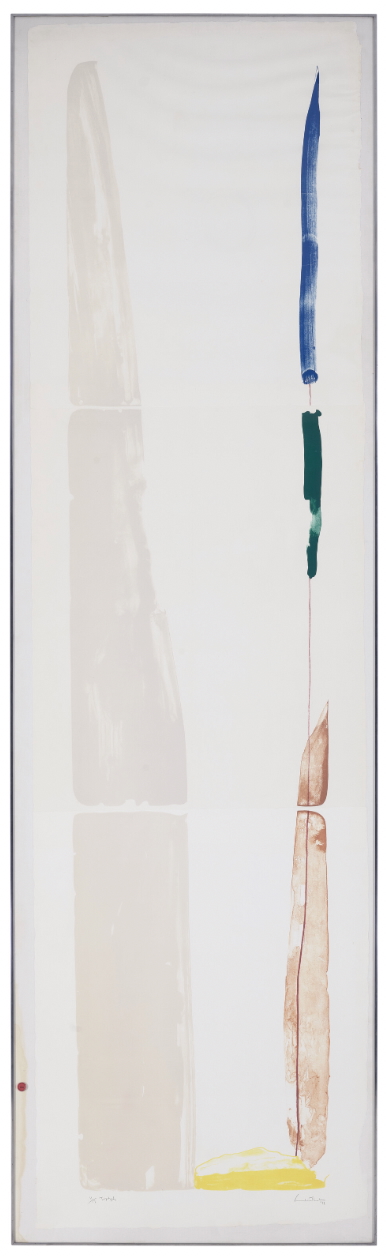
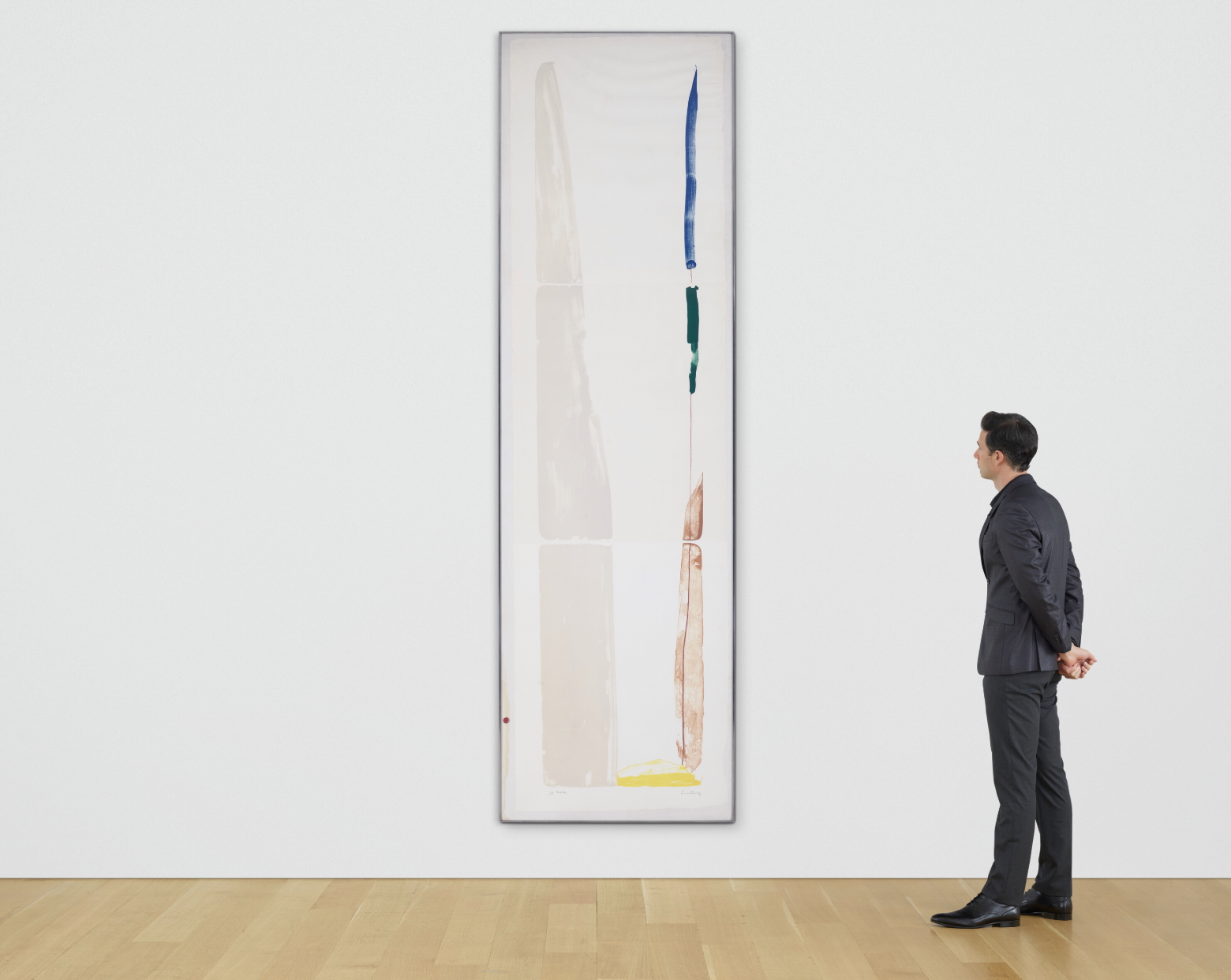
Signed and dated in pencil, numbered from an edition of 17
Published by Universal Limited Art Editions, West Islip, New York, with their blindstamp,
Overall: 130 ¾ x 36 ¼ inches (332.1 x 92.1 cm.)
All works are inspected prior to delivery, work will be sent out tracked and insured at buyers cost. If you'd like to make specific arrangements or discuss collection then please contact us directly.
Accepted: Wire transfer
ART PLEASE Assurance Policy: Every ART PLEASE seller has been approved by ART PLEASE after a thorough review. All of our sellers are required to accept the following ART PLEASE policy: A buyer may return an item purchased through ART PLEASE, if the item received is not as described in its listing, or is found to be unauthentic.
Helen Frankenthaler (1928–2011) was a key figure in postwar American abstraction and one of the bridge artists between Abstract Expressionism and Color Field painting. Emerging in the 1950s, she developed a distinctive “soak-stain” approach, pouring thinned paint onto unprimed canvas so that color and surface became inseparable. This fusion of drawing, color, and gesture carried over into her printmaking, where she treated lithography, etching, and later woodcut as extensions of her painting practice rather than secondary or reproductive media. Working closely with master printers—especially at Universal Limited Art Editions (ULAE)—she pushed technical boundaries to achieve the same sense of spontaneity, translucency, and atmospheric depth that defined her canvases.
Her 1971 lithograph Lot’s Wife is one of the landmark prints of her career: a monumental lithograph in colors on three sheets of Japan paper, signed and dated in pencil and numbered from a small edition of 17, published by Universal Limited Art Editions, West Islip, New York, with their blindstamp. Measuring approximately 130 ¾ x 36 ¼ inches (332.1 x 92.1 cm) overall, it reads as a towering, vertical abstraction whose cascading veils of color echo the Biblical reference in the title—the moment Lot’s wife looks back and turns into a pillar of salt. Frankenthaler famously said she completed Lot’s Wife “in one shot,” resisting the urge to revise it, which she likened to not looking back.
The work’s scale, division into three joined sheets, and fluid, poured forms all underscore how she used printmaking not merely to reproduce an image, but to re-invent the possibilities of the lithographic stone on an almost architectural scale.