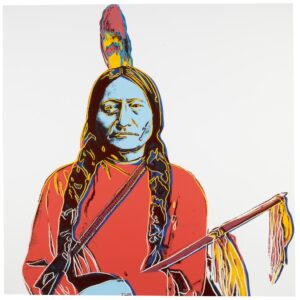

Plains Indian Shield, 1986
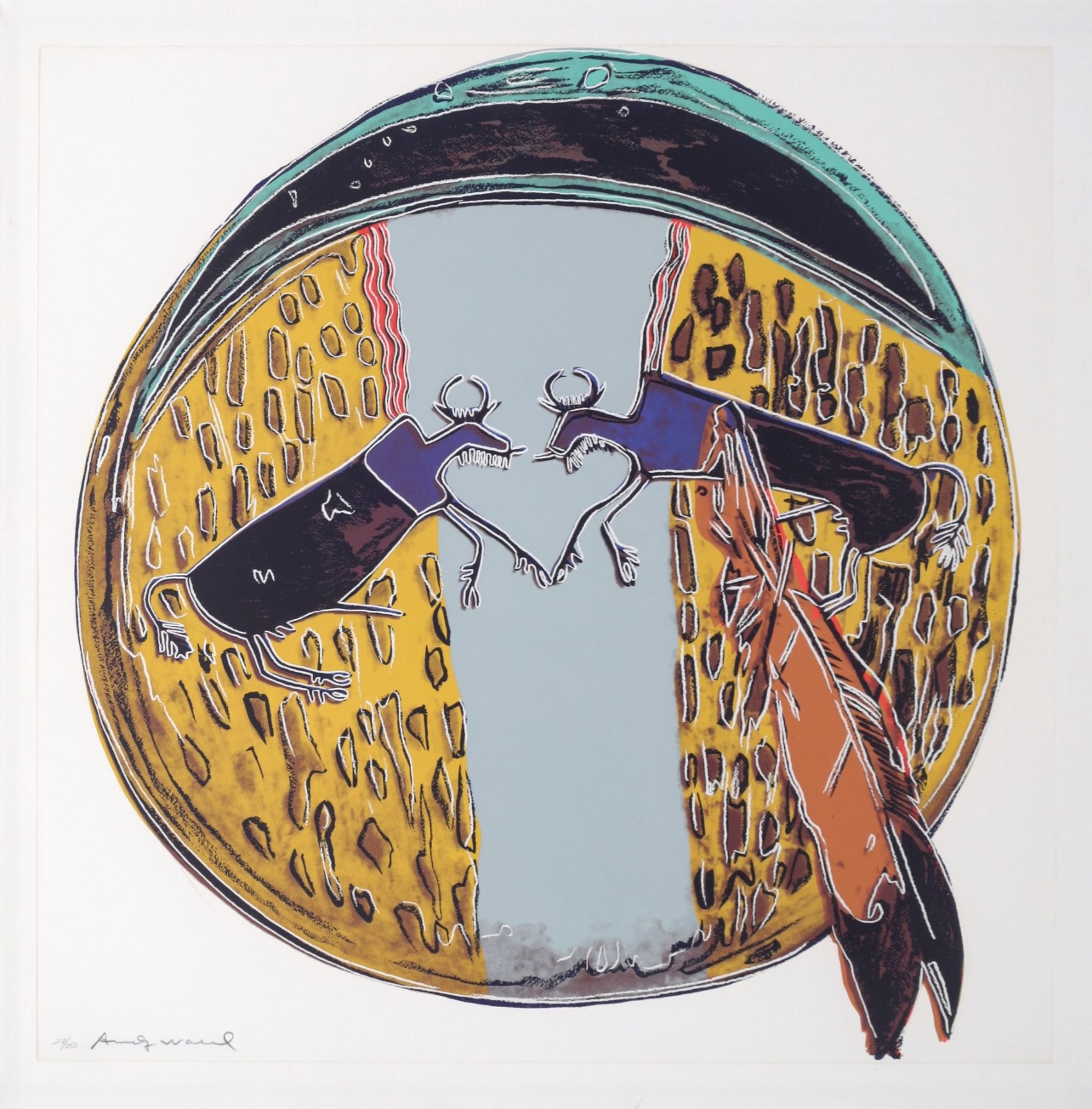
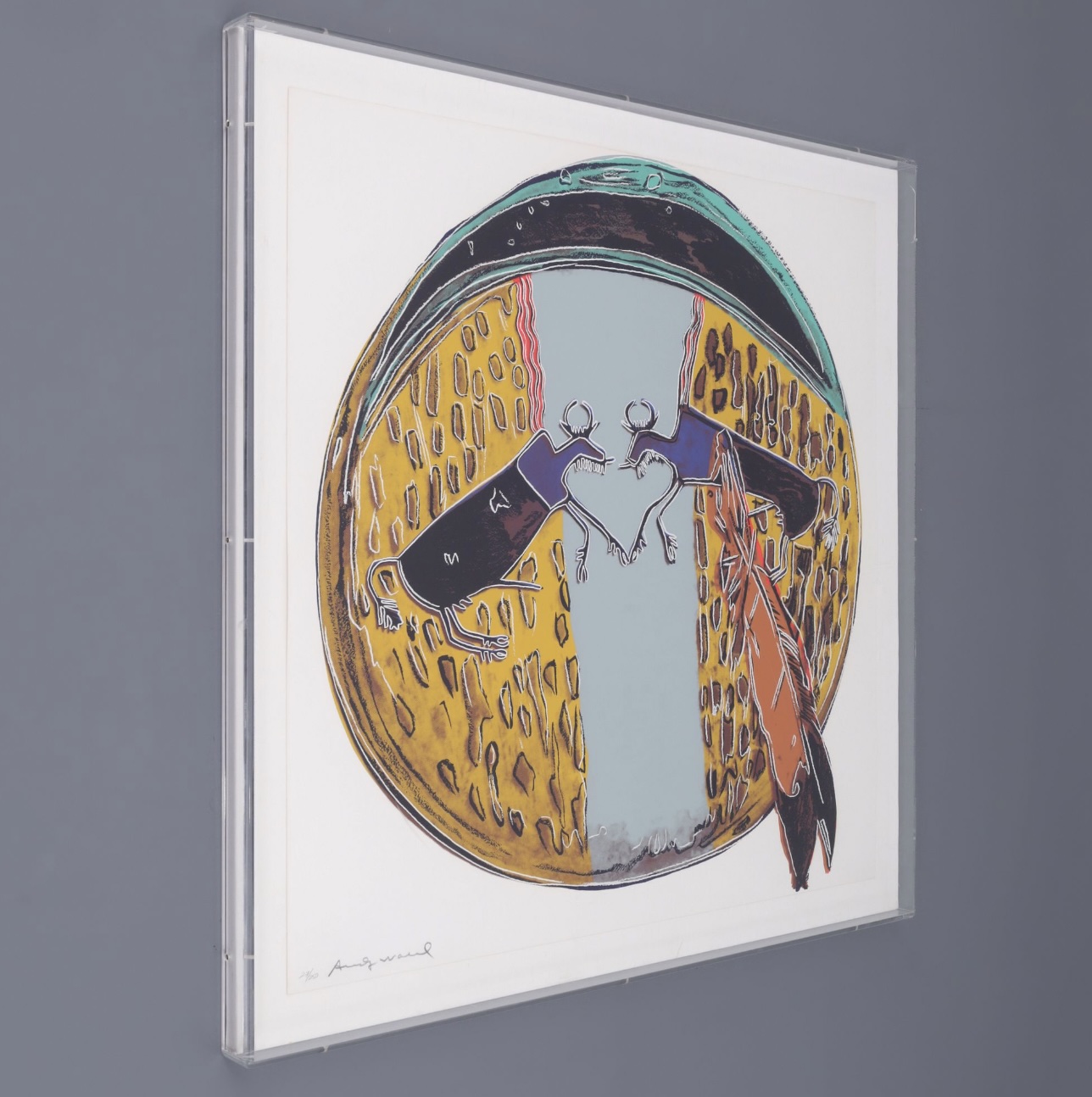
Signed and numbered from an edition of 250
36 × 36 inches (91.4 × 91.4 cm.)
All works are inspected prior to delivery, work will be sent out tracked and insured at buyers cost. If you'd like to make specific arrangements or discuss collection then please contact us directly.
Accepted: Wire transfer
ART PLEASE Assurance Policy: Every ART PLEASE seller has been approved by ART PLEASE after a thorough review. All of our sellers are required to accept the following ART PLEASE policy: A buyer may return an item purchased through ART PLEASE, if the item received is not as described in its listing, or is found to be unauthentic.
In 1986, near the end of his career, Andy Warhol created Plain Indian Shields as part of his celebrated Cowboys and Indians series—a body of work that examined myth, identity, and the construction of American history. Throughout his career, Warhol was fascinated by icons—whether celebrities, consumer brands, or cultural symbols—and here he turned his lens toward the imagery of the American West. By isolating the shield and presenting it in bold, graphic color, Warhol transforms a historical object into a contemporary emblem, flattening the boundary between artifact and Pop image. The work reflects his ongoing exploration of how mass reproduction alters meaning, inviting viewers to reconsider the symbolism embedded within American cultural narratives.
Executed as a screenprint on Lenox Museum Board, Plain Indian Shields measures 36 × 36 inches (91.4 × 91.4 cm.), a square format that reinforces its graphic power and symmetry. Signed and numbered from an edition of 250, the work exemplifies Warhol’s mastery of silkscreen technique—layered color fields, crisp outlines, and deliberate repetition combine to create visual immediacy. As one of Warhol’s final major series before his death in 1987, Cowboys and Indians carries particular historical resonance, marking a late-career reflection on American mythology. Today, Plain Indian Shields stands as a compelling example of Warhol’s ability to recontextualize cultural imagery, merging history, commerce, and art into a single, striking composition.