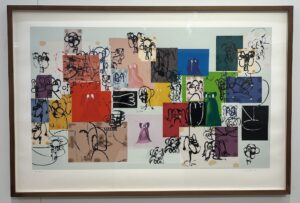

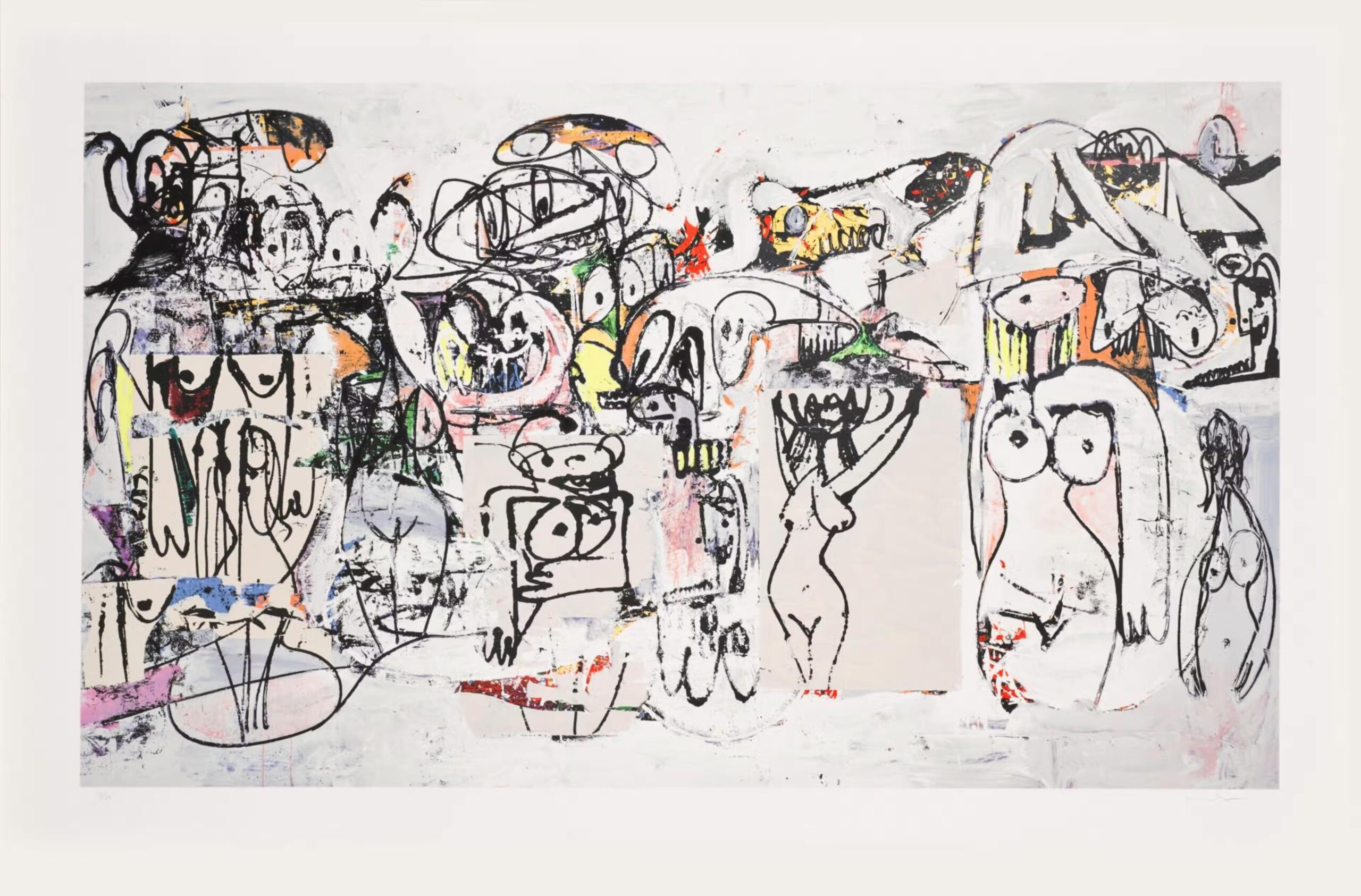
Invocations of Miles, 2000
Signed and numbered from an edition of 50
30 1/2 × 45 22/25 inches (77.5 × 116.5 cm.)
All works are inspected prior to delivery, work will be sent out tracked and insured at buyers cost. If you'd like to make specific arrangements or discuss collection then please contact us directly.
Accepted: Wire transfer
ART PLEASE Assurance Policy: Every ART PLEASE seller has been approved by ART PLEASE after a thorough review. All of our sellers are required to accept the following ART PLEASE policy: A buyer may return an item purchased through ART PLEASE, if the item received is not as described in its listing, or is found to be unauthentic.
George Condo is widely regarded as one of the most distinctive painters of his generation, known for developing what he calls “psychological cubism.” In this approach, Condo combines elements of Old Master portraiture, cartoon imagery, and modernist abstraction to create figures that embody multiple emotional states at once. His characters—often grotesque, humorous, or exaggerated—reflect the complexity of the human psyche and the chaos of contemporary culture. Influenced by artists such as Picasso, Velázquez, and Goya, Condo merges art historical references with pop culture and caricature, producing compositions that are both intellectually layered and visually striking.
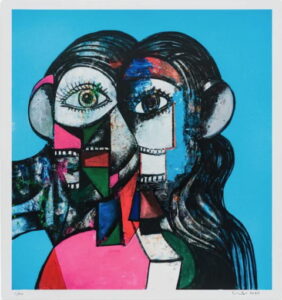
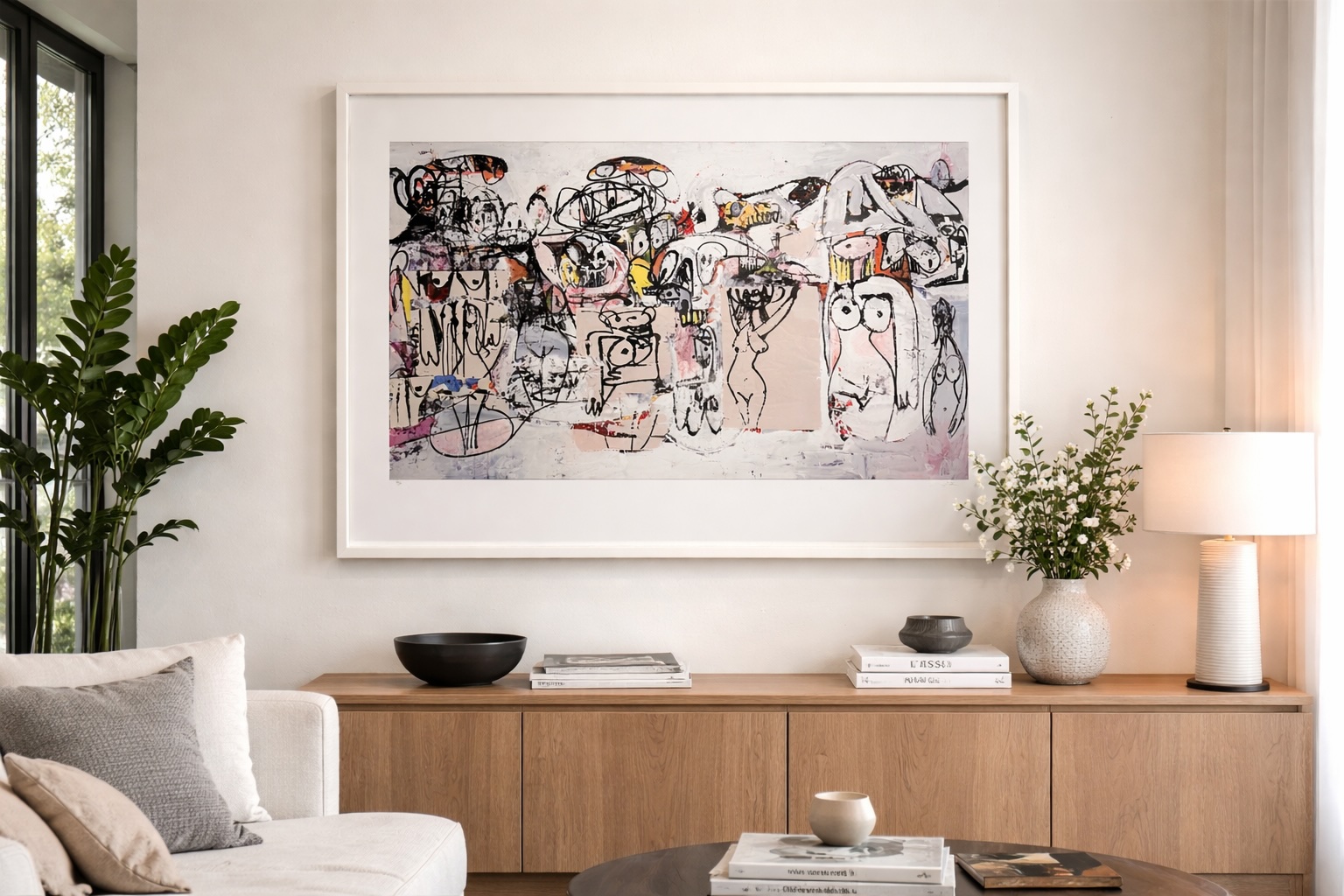
Invocations of Miles (2000) exemplifies this signature style. Executed as a screenprint in colors on wove paper, the work presents a crowded field of distorted figures rendered in energetic black lines and layered painterly tones. The chaotic arrangement of hybrid faces and bodies creates a rhythmic composition where humor and unease coexist, reflecting Condo’s fascination with the fragmented nature of identity. Measuring 30 1/2 × 45 22/25 inches (77.5 × 116.5 cm.) and signed and numbered from an edition of 50, the print captures the expressive immediacy of Condo’s drawing practice while translating it into the precise, layered process of printmaking. The title’s reference to “Miles” evokes a sense of improvisation reminiscent of jazz—an apt parallel to the spontaneous, improvisational energy that defines the composition.