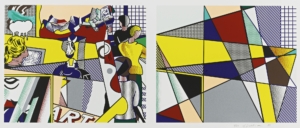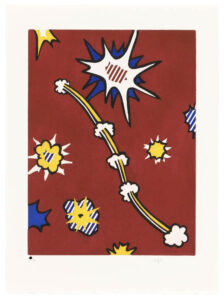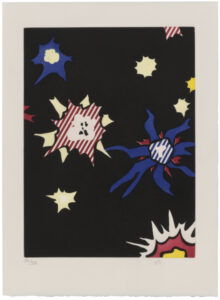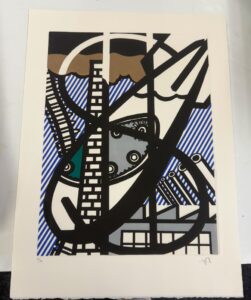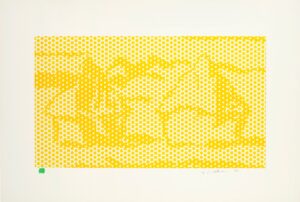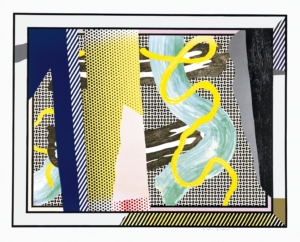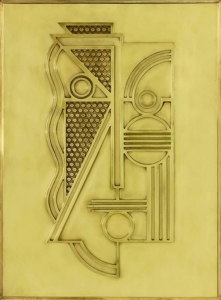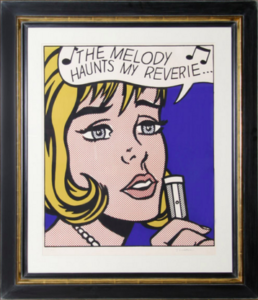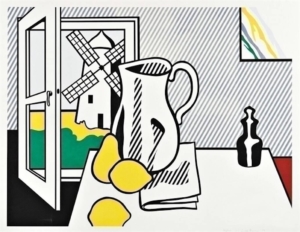

Illustration for De Denver au Montana, départ 27 Mai 1972 (I) (from La nouvelle chute de l'Amérique portfolio), 1992
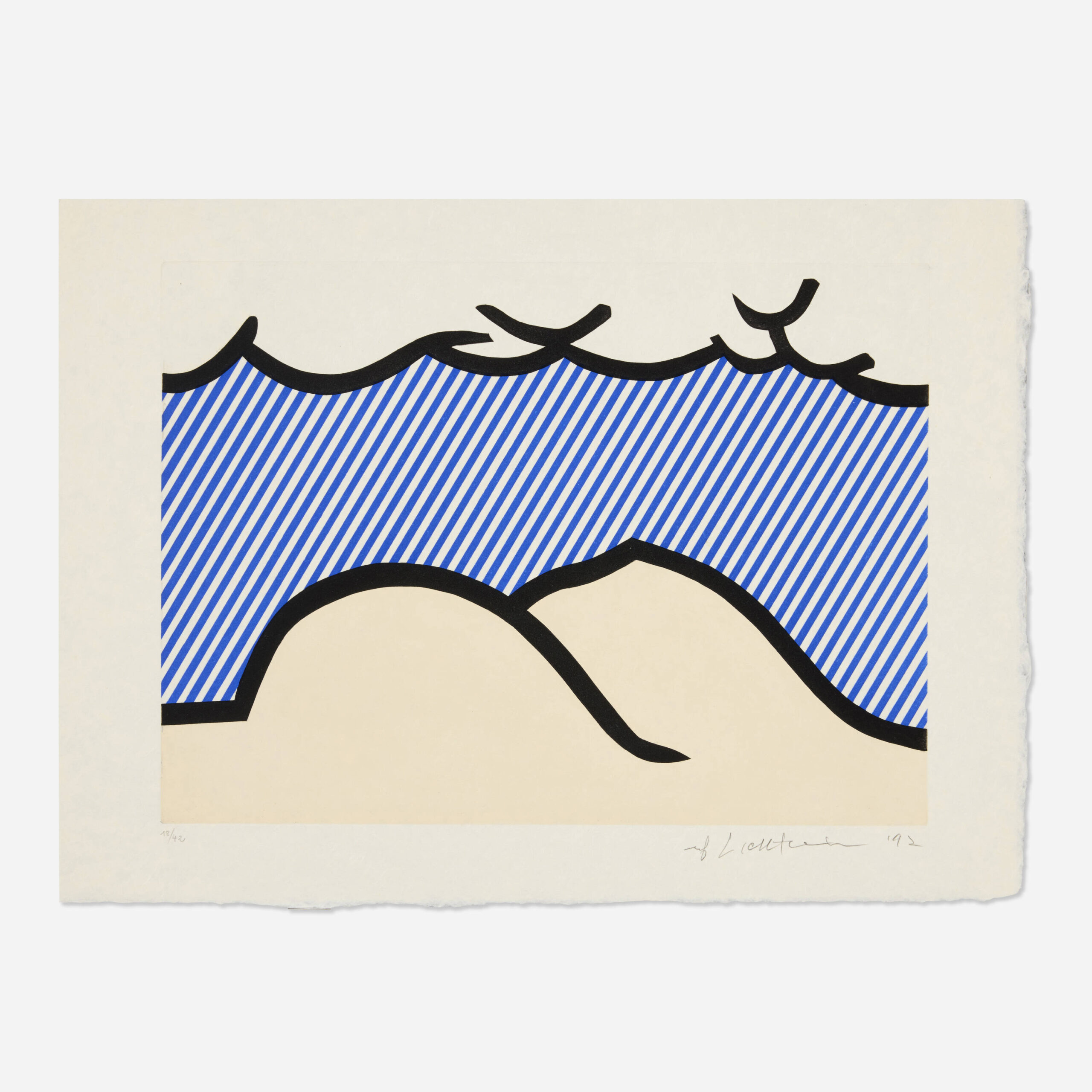
Signed, dated and numbered to lower edge
From an edition of 42
13⅞ × 19 inches (35 × 48 cm.)
All works are inspected prior to delivery, work will be sent out tracked and insured at buyers cost. If you'd like to make specific arrangements or discuss collection then please contact us directly.
Accepted: Wire transfer
ART PLEASE Assurance Policy: Every ART PLEASE seller has been approved by ART PLEASE after a thorough review. All of our sellers are required to accept the following ART PLEASE policy: A buyer may return an item purchased through ART PLEASE, if the item received is not as described in its listing, or is found to be unauthentic.
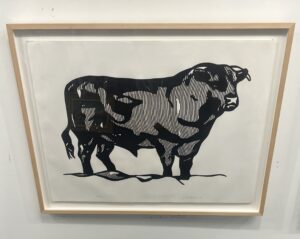
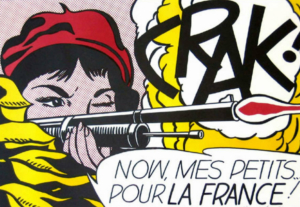
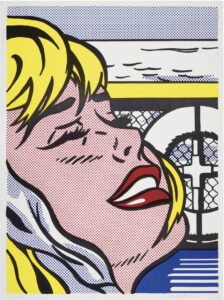
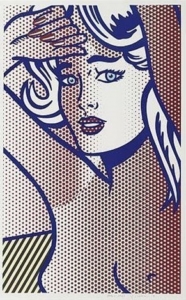
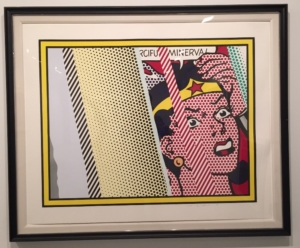
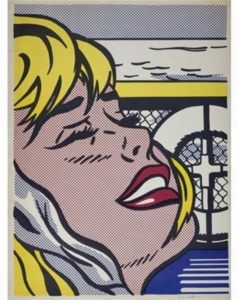
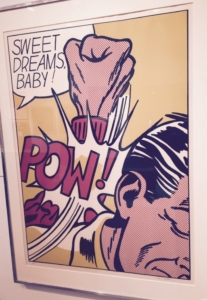
Roy Lichtenstein was a central figure of Pop Art, known for transforming the visual language of mass media—particularly comic strips and advertising—into high art. Emerging in the early 1960s, he developed a signature style defined by bold outlines, flat primary colors, and the meticulous imitation of Ben-Day dots, a commercial printing technique. His work challenges traditional distinctions between “high” and “low” culture, often recontextualizing familiar imagery into something at once ironic, emotionally detached, and visually striking. Over time, Lichtenstein expanded beyond comic imagery into art-historical references, interiors, and landscapes, all while maintaining his distinct graphic vocabulary.
Illustration for De Denver au Montana, départ 27 Mai 1972 (I), from La nouvelle chute de l’Amérique (1992), exemplifies Lichtenstein’s later engagement with printmaking and literary collaboration. Executed as an etching and aquatint in colors on Japan nacré paper, the work reflects a refined, tactile quality that contrasts with the mechanical aesthetic it references. Measuring 13⅞ × 19 inches (35 × 48 cm.), it is signed, dated, and numbered along the lower edge, and belongs to a limited edition of 42. The composition draws from travel and narrative themes, translating motion and landscape into Lichtenstein’s stylized visual language. At once poetic and graphic, the print bridges text and image, reinforcing his lifelong exploration of how meaning is constructed through reproduction, serialization, and visual shorthand.