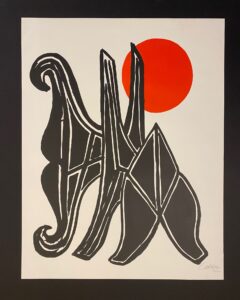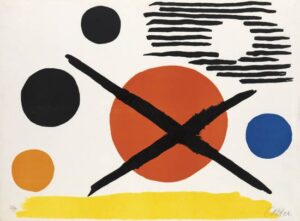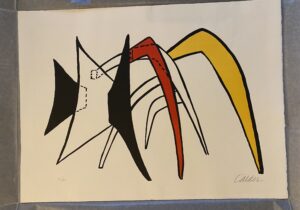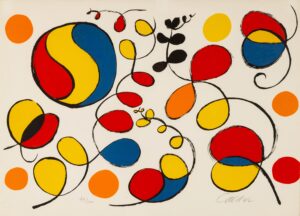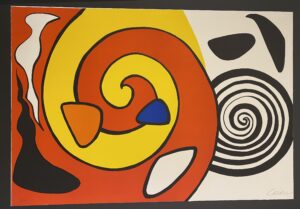

Untitled, 1961
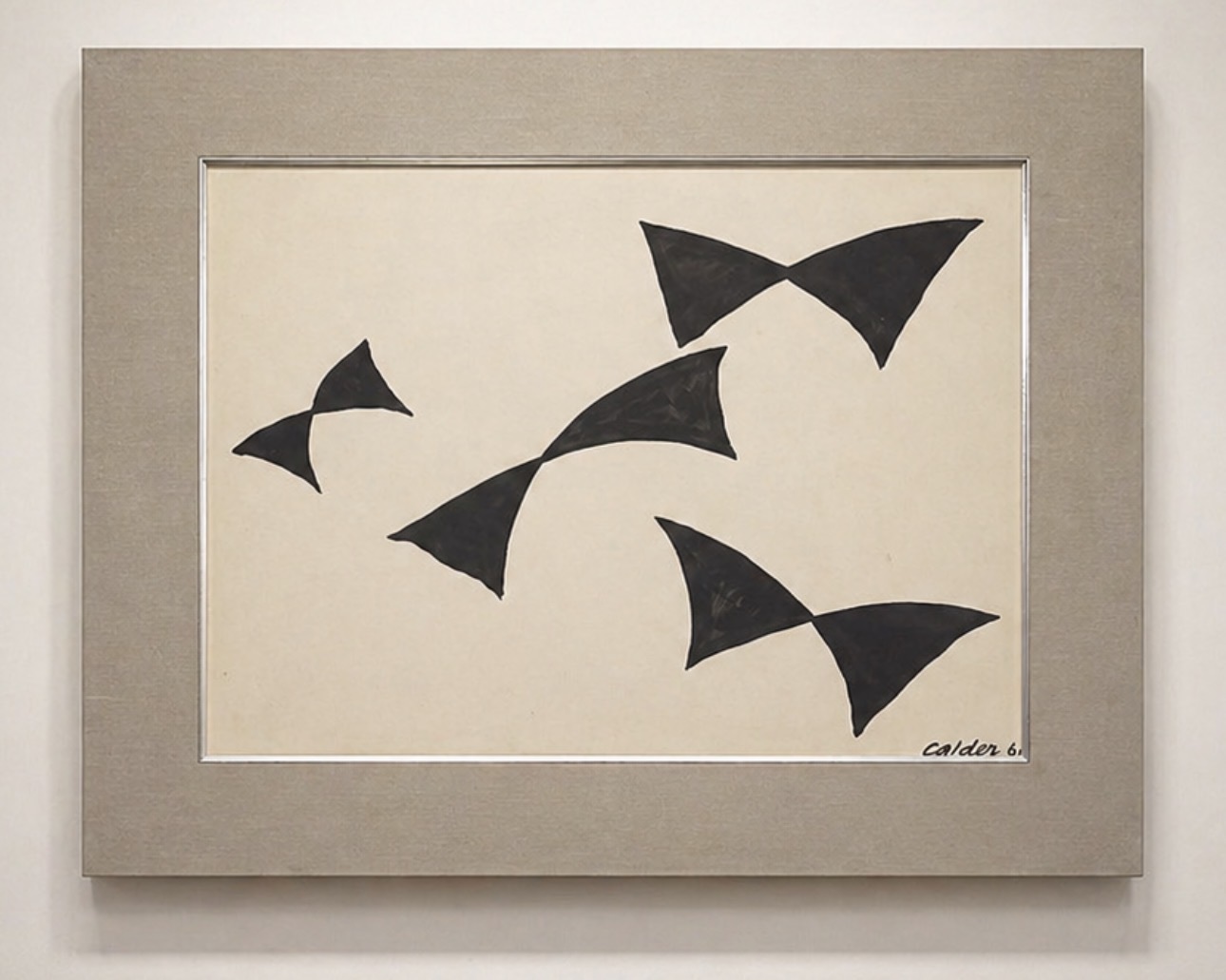
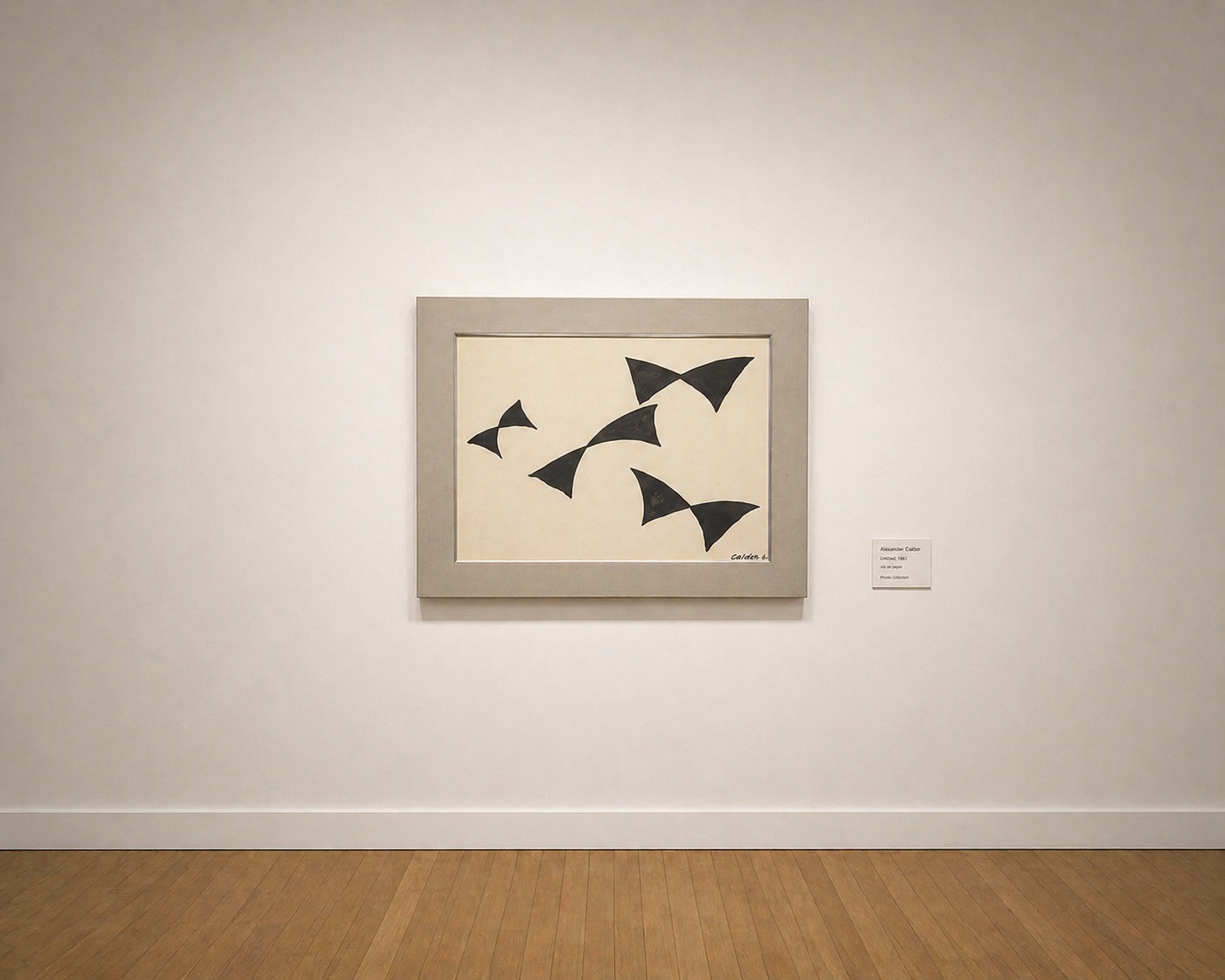
Signed and dated 'Calder 61' (lower right) ink on paper laid on canvas
This work is registered in the archives of the Calder Foundation, New York
21 1/2 x 29 3/4 inches (54.6 × 75.6 cm.)
All works are inspected prior to delivery, work will be sent out tracked and insured at buyers cost. If you'd like to make specific arrangements or discuss collection then please contact us directly.
Accepted: Wire transfer
ART PLEASE Assurance Policy: Every ART PLEASE seller has been approved by ART PLEASE after a thorough review. All of our sellers are required to accept the following ART PLEASE policy: A buyer may return an item purchased through ART PLEASE, if the item received is not as described in its listing, or is found to be unauthentic.
Alexander Calder is celebrated as one of the most innovative sculptors of the 20th century, best known for inventing the mobile and redefining the relationship between form, movement, and space. Yet his works on paper reveal a more intimate, distilled side of his practice. In Untitled, 1961, Calder reduces his visual language to a series of bold, biomorphic black forms that seem to float across the surface like abstracted birds or fragments in motion. Executed in ink on paper and laid down on canvas, the composition reflects his sculptural thinking—each element carefully balanced, suggesting weight, rhythm, and spatial tension despite the flat medium. The simplicity of line and shape underscores Calder’s mastery: with minimal means, he evokes a sense of dynamism and quiet energy.
The arrangement of forms in this work appears spontaneous, yet it is highly deliberate, echoing the same equilibrium found in his three-dimensional mobiles. The negative space plays as critical a role as the forms themselves, allowing the composition to “breathe” and enhancing the impression of movement across the field. Signed and dated “Calder 61” and registered with the Calder Foundation, the work sits firmly within a mature period of his career, when his visual vocabulary was fully refined. At 21 1/2 by 29 3/4 inches, it possesses an elegant scale that invites close viewing, rewarding the observer with a quiet but persistent sense of motion—an essential hallmark of Calder’s enduring artistic legacy.