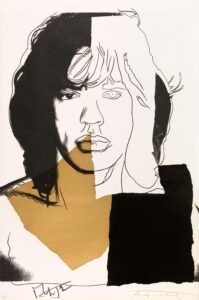

George Gershwin, from 10 Portraits of Jews of the Twentieth Century, 1980
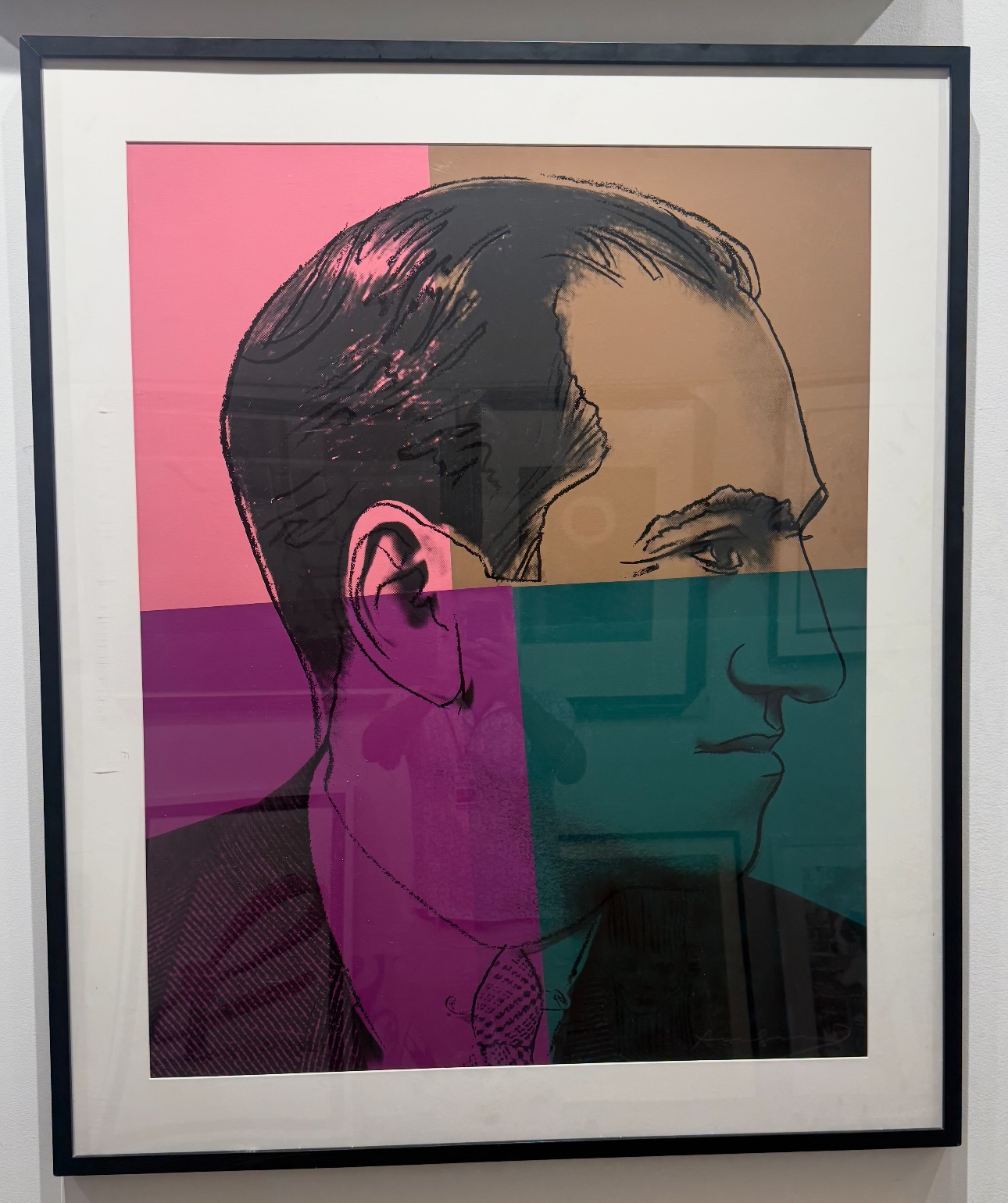
Signed in pencil, a unique work, one of 25 Trial Proofs
With the artist's copyright ink stamp on the reverse
40 x 32 inches (101.6 x 81.3 cm.)
All works are inspected prior to delivery, work will be sent out tracked and insured at buyers cost. If you'd like to make specific arrangements or discuss collection then please contact us directly.
Accepted: Wire transfer
ART PLEASE Assurance Policy: Every ART PLEASE seller has been approved by ART PLEASE after a thorough review. All of our sellers are required to accept the following ART PLEASE policy: A buyer may return an item purchased through ART PLEASE, if the item received is not as described in its listing, or is found to be unauthentic.
Andy Warhol (1928–1987) was the defining figure of Pop Art, translating the imagery of mass media, celebrity, and consumer culture into some of the most iconic artworks of the 20th century. Trained as a commercial illustrator, he embraced the screenprint as both a mechanical process and an artistic language, using it to repeat, distort, and electrify familiar faces and logos. By 1980, Warhol was deep into a late-career phase focused on portraiture and cultural icons, often working in series that examined fame, identity, and history through a cool, graphic style. His portfolio Ten Portraits of Jews of the Twentieth Century (1980) grew out of this interest, depicting major Jewish “geniuses” from politics, science, literature, and entertainment, including figures like Einstein, Freud, and composer George Gershwin.
George Gershwin, from 10 Portraits of Jews of the Twentieth Century is a screenprint in colors on Lenox Museum Board, measuring 40 x 32 inches (101.6 x 81.3 cm), signed in pencil and here realized as a unique work—a Trial Proof from an edition of 25, bearing the artist’s copyright ink stamp on the reverse. In this image, Warhol layers blocks of vivid color over a photographic source, fragmenting Gershwin’s features into planes of mauve, green, gold, and electric line.
The result is both glamorous and slightly dislocated: Gershwin appears as a modern cultural monument, his profile suspended in a field of abstract geometry and neon-like accents. As part of the Ten Portraits series, the work encapsulates Warhol’s fascination with celebrity and legacy, recasting a foundational American composer as a Pop icon whose image, like his music, continues to circulate in the collective memory.