
Jacqueline Kennedy I (Jackie I), 1966

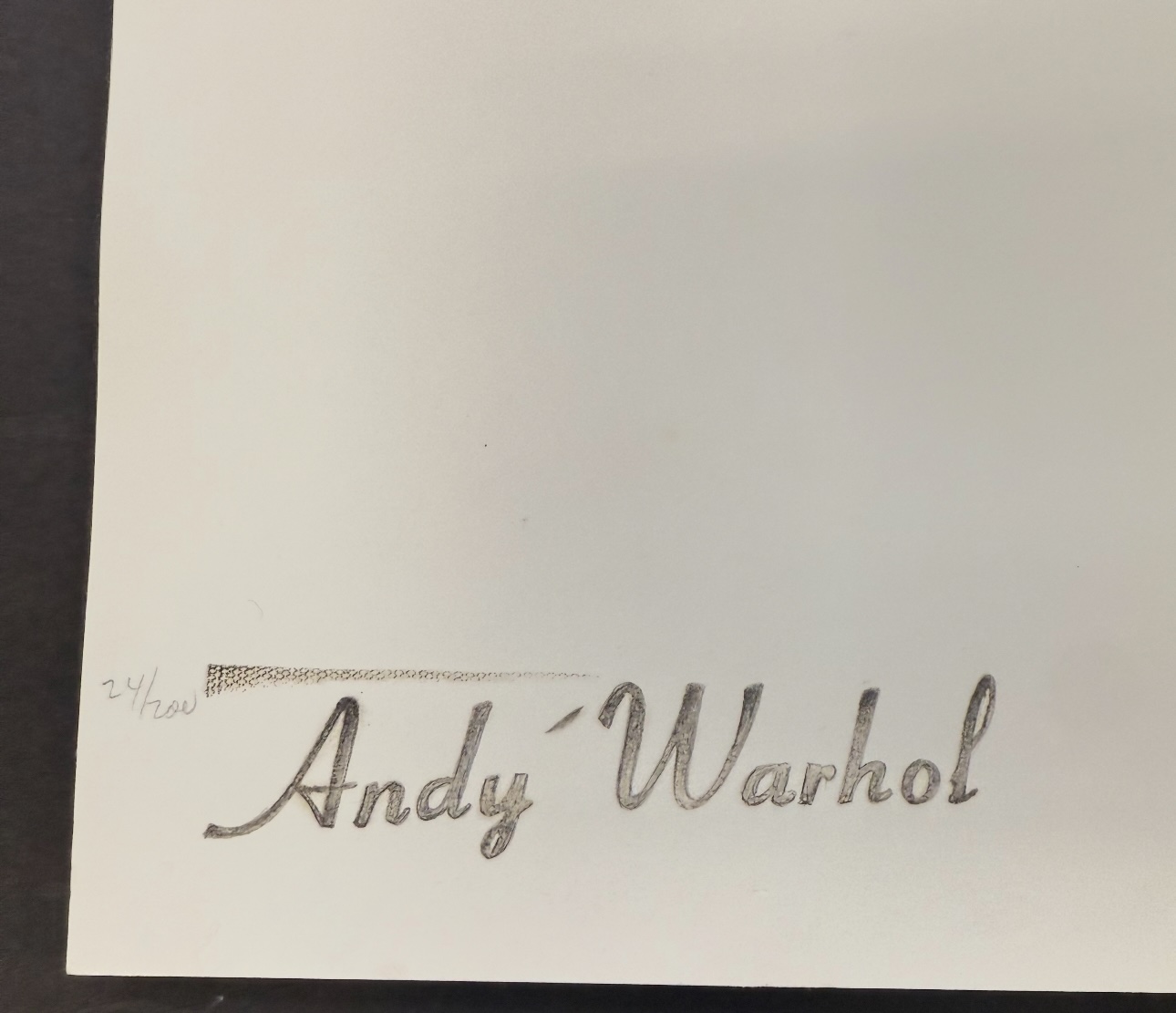
24 x 20 ⅜ inches (61.1 x 51.8 cm.)
All works are inspected prior to delivery, work will be sent out tracked and insured at buyers cost. If you'd like to make specific arrangements or discuss collection then please contact us directly.
Accepted: Wire transfer
ART PLEASE Assurance Policy: Every ART PLEASE seller has been approved by ART PLEASE after a thorough review. All of our sellers are required to accept the following ART PLEASE policy: A buyer may return an item purchased through ART PLEASE, if the item received is not as described in its listing, or is found to be unauthentic.
Andy Warhol’s Jackie I is one of the artist’s most poignant and culturally resonant portraits, capturing Jacqueline Kennedy at a moment when her public image became inseparable from national tragedy. Using a press photograph as his source, Warhol isolates Jackie’s expression in the aftermath of President John F. Kennedy’s assassination, transforming a moment of collective grief into a powerful Pop icon. Rendered as a screenprint in silver, the work emphasizes both glamour and melancholy; the metallic surface echoes the flash of news cameras while imparting a ghostly, reflective quality that heightens the emotional weight of the image. Warhol’s repetition of Jackie’s portrait across multiple works from this period underscores his fascination with the way the media shapes memory, emotion, and public identity.
This particular impression is especially significant as an unpublished proof for the print that would later appear in 11 Pop Artists, Volume I. Unlike the numbered edition of 200—where the stamped signature appears on the verso—this proof features Warhol’s stamped signature on the recto, marking it as a rare and notable variant. Executed on wove paper and measuring 24 × 20 3/8 inches, the work holds both historical and technical importance within Warhol’s early Pop period. As an unpublished proof tied to one of Warhol’s most important themes—celebrity, tragedy, and the media—Jackie I offers collectors a unique connection to one of the defining bodies of work in postwar American art.