
Skulls (FS II.158), 1976
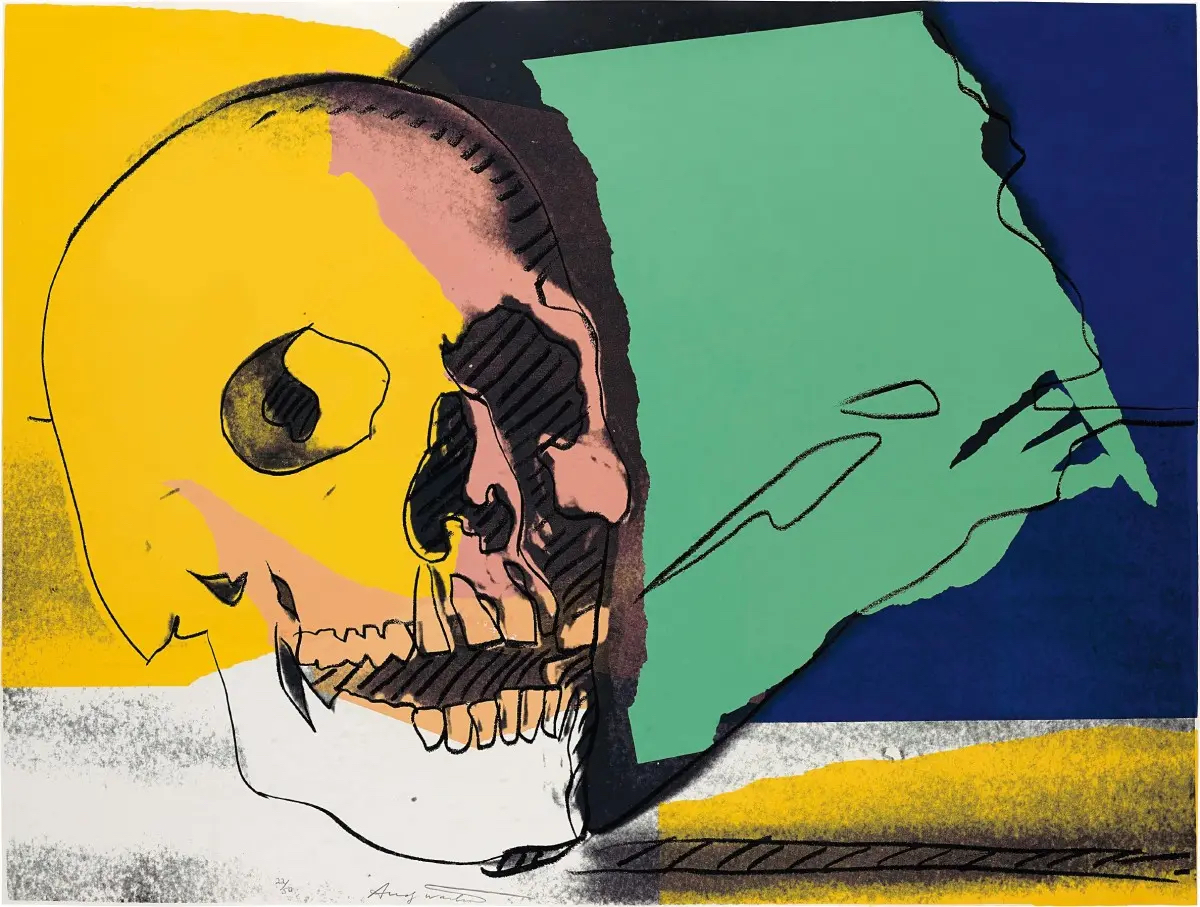
From an edition of 50
This work is hand signed and numbered by Andy Warhol in pencil in the lower center.
30 x 40 inches (76.2 x 101.6 cm)
All works are inspected prior to delivery, work will be sent out tracked and insured at buyers cost. If you'd like to make specific arrangements or discuss collection then please contact us directly.
Accepted: Wire transfer
ART PLEASE Assurance Policy: Every ART PLEASE seller has been approved by ART PLEASE after a thorough review. All of our sellers are required to accept the following ART PLEASE policy: A buyer may return an item purchased through ART PLEASE, if the item received is not as described in its listing, or is found to be unauthentic.
Skulls (FS II.158) is a striking example of Andy Warhol’s late-career fascination with mortality, glamour, and the fragile line between life and death. Created as part of his celebrated Skulls series, the work transforms the traditionally ominous symbol of the skull into something unexpectedly seductive and visually electric. Warhol’s use of bold color contrasts and dramatic shadowing gives the composition an almost theatrical quality, balancing pop sensibility with existential depth. While rooted in the visual language of mass culture that defined his career, Skulls (FS II.158) carries a darker psychological undertone, reflecting the artist’s increasing preoccupation with themes of impermanence and human vulnerability during the 1970s.
Executed as a screenprint on Arches paper, this work is from an edition of 50 and is hand signed and numbered by Andy Warhol in pencil in the lower center. Measuring 30 x 40 inches (76.2 x 101.6 cm), the composition possesses a commanding presence, with the skull rendered in vivid tonal variations that heighten both its graphic intensity and sculptural form. Warhol’s ability to elevate a universal symbol into an icon of contemporary art is fully realized here, making Skulls (FS II.158) one of the most recognizable and sought-after works from his later oeuvre. The print encapsulates the tension between beauty and decay that continues to make Warhol’s work profoundly relevant within both contemporary culture and the history of Pop Art.