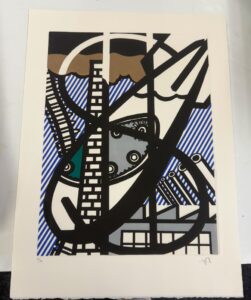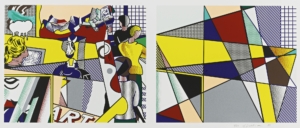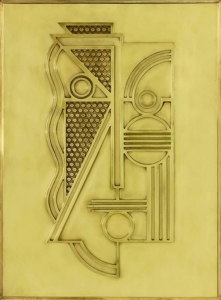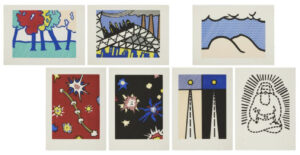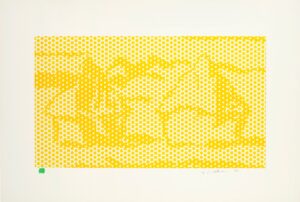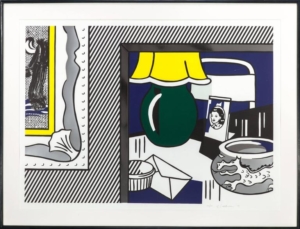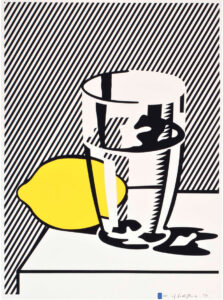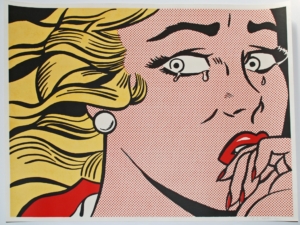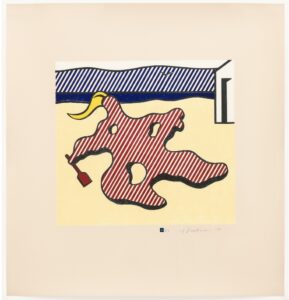

Illustration for "Passage du Nord-Ouest", 1992
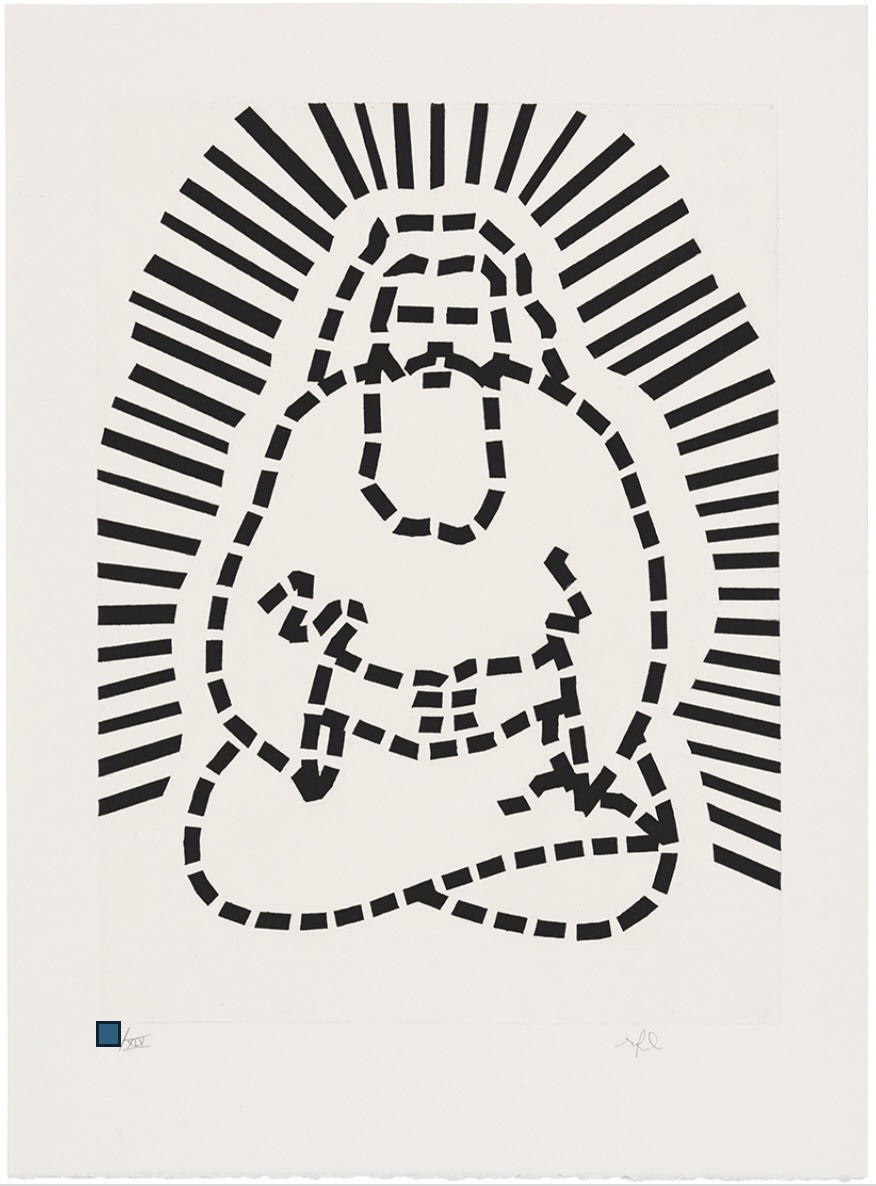
From an edition of 80
Signed, dated and numbered to lower edge
18 9/10 × 13 9/10 inches (48.1 × 35.3 cm.)
All works are inspected prior to delivery, work will be sent out tracked and insured at buyers cost. If you'd like to make specific arrangements or discuss collection then please contact us directly.
Accepted: Wire transfer
ART PLEASE Assurance Policy: Every ART PLEASE seller has been approved by ART PLEASE after a thorough review. All of our sellers are required to accept the following ART PLEASE policy: A buyer may return an item purchased through ART PLEASE, if the item received is not as described in its listing, or is found to be unauthentic.
Roy Lichtenstein’s illustration for Passage du Nord-Ouest reflects his sophisticated engagement with modernist abstraction, graphic design, and the visual language of print media. Created for a literary context rather than as an autonomous Pop image, the work demonstrates how Lichtenstein adapted his iconic style—bold black outlines, flat color planes, and graphic clarity—to serve narrative and conceptual purposes. Drawing on sources ranging from commercial illustration to architectural and industrial diagrams, Lichtenstein transforms the idea of “passage” into a visual structure that feels both mechanical and directional, echoing themes of exploration, movement, and constructed space suggested by the title. The result is an image that bridges art and illustration while remaining unmistakably his own.
Rather than relying on comic-strip imagery or Benday dots, this work aligns more closely with Lichtenstein’s late-1960s and 1970s explorations of modernism, where he dissected and reinterpreted the formal languages of Cubism, Constructivism, and modern design. As an illustration, Passage du Nord-Ouest highlights Lichtenstein’s interest in context—how images function differently when embedded within books, texts, or cultural frameworks. It underscores his belief that so-called “applied” art could carry the same intellectual and aesthetic weight as fine art. Today, the work stands as a compelling example of Lichtenstein’s versatility and his ability to translate complex ideas into precise, visually striking compositions that operate across disciplines.