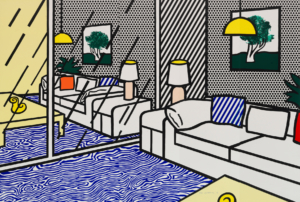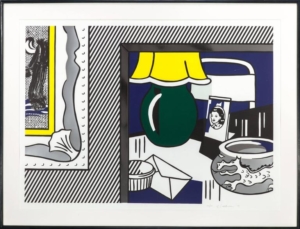

Two Paintings Green Lamp, 1984
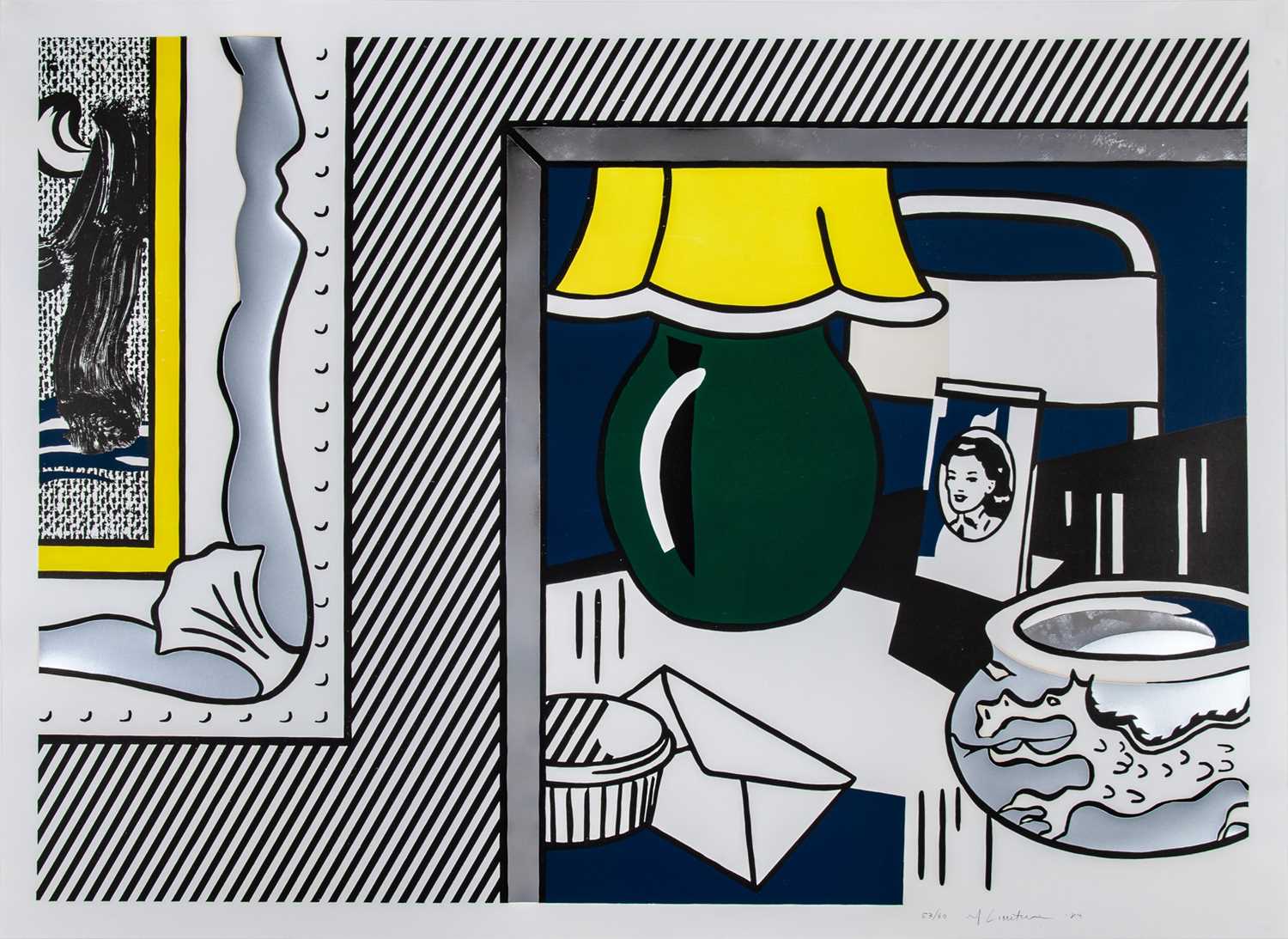
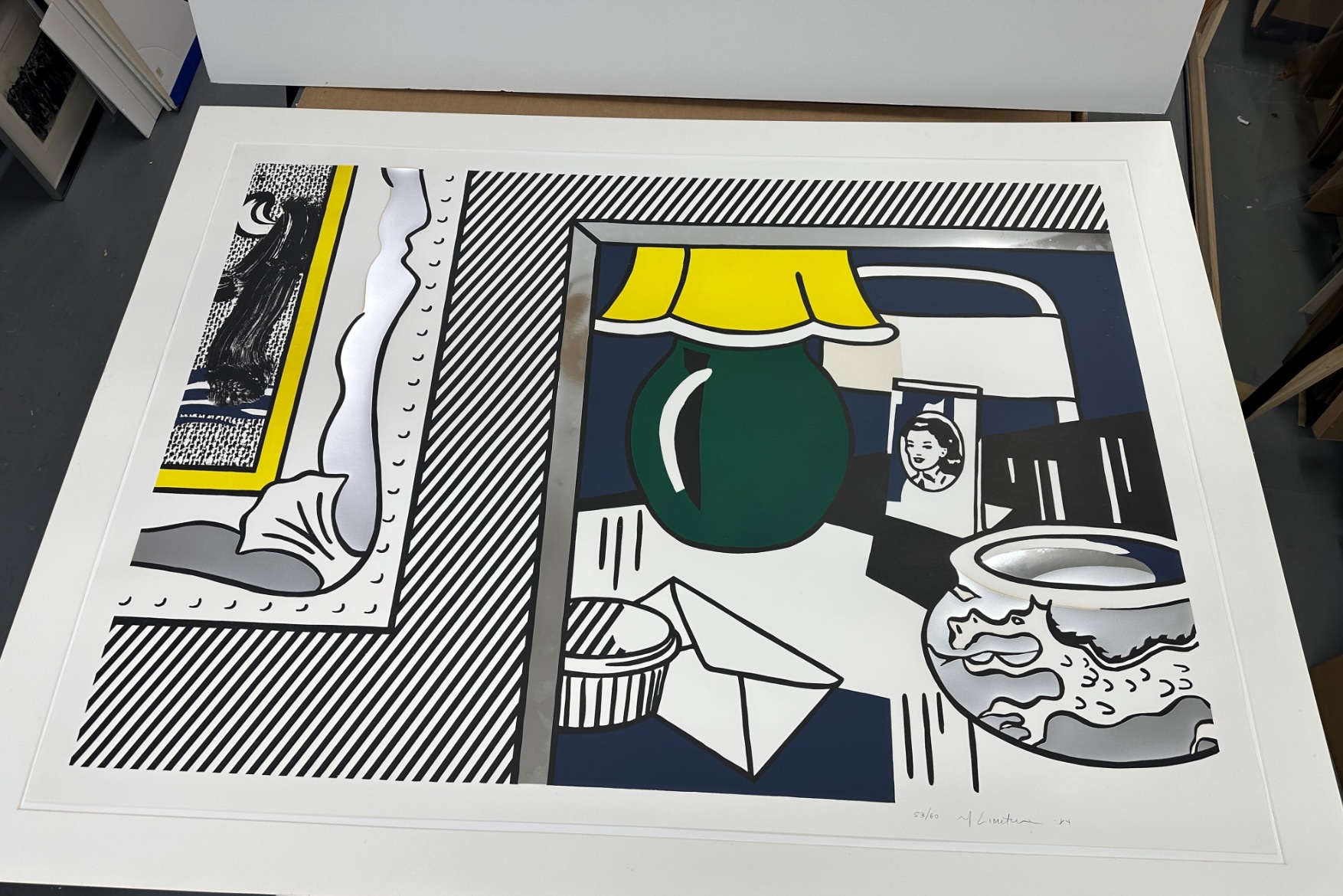
Signed, dated and numbered from an edition of 60, from Paintings Series, published by Gemini G.E.L., Los Angeles, with their blindstamps
38 5/8 x 53 inches (98 x 134.7 cm.)
All works are inspected prior to delivery, work will be sent out tracked and insured at buyers cost. If you'd like to make specific arrangements or discuss collection then please contact us directly.
Accepted: Wire transfer
ART PLEASE Assurance Policy: Every ART PLEASE seller has been approved by ART PLEASE after a thorough review. All of our sellers are required to accept the following ART PLEASE policy: A buyer may return an item purchased through ART PLEASE, if the item received is not as described in its listing, or is found to be unauthentic.
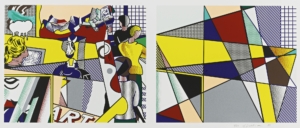
Roy Lichtenstein’s Two Paintings: Green Lamp (1984) is a striking example of his late exploration of art history, reproduction, and the language of painting itself. Executed as a complex combination of color woodcut, lithograph, screenprint, and collage on Arches 88 paper, the work belongs to his celebrated Paintings series, published by Gemini G.E.L., Los Angeles. Measuring 38 5/8 × 53 inches (98 × 134.7 cm.) and signed, dated, and numbered from an edition of 60, the composition presents a diptych-like format in which a stylized green lamp becomes the central motif. Lichtenstein layers bold outlines, Ben-Day dots, and flat fields of color with gestural brushstroke imagery, creating a deliberate tension between mechanical reproduction and the illusion of painterly expression.
In Two Paintings: Green Lamp, Lichtenstein turns inward, reflecting on the act of painting through the lens of Pop Art. The juxtaposition of two panels suggests both repetition and variation, echoing the artist’s ongoing dialogue with modernist masters while simultaneously questioning notions of originality and authenticity. The “brushstrokes” are not spontaneous marks but carefully constructed images, emphasizing Lichtenstein’s fascination with the codification of visual language. By incorporating collage elements alongside traditional printmaking techniques, he further blurs the boundaries between mediums, reinforcing the idea that painting, in the contemporary era, is as much about interpretation and reproduction as it is about direct expression. The result is a work that is both visually immediate and conceptually layered, underscoring Lichtenstein’s enduring influence on the discourse of postwar art.