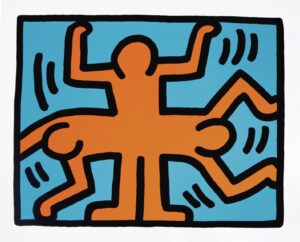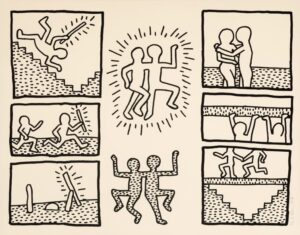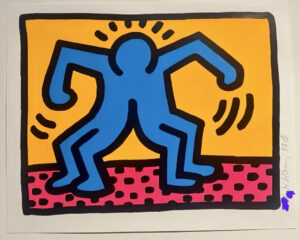

Best Buddies (from Pop Shop I), 1987
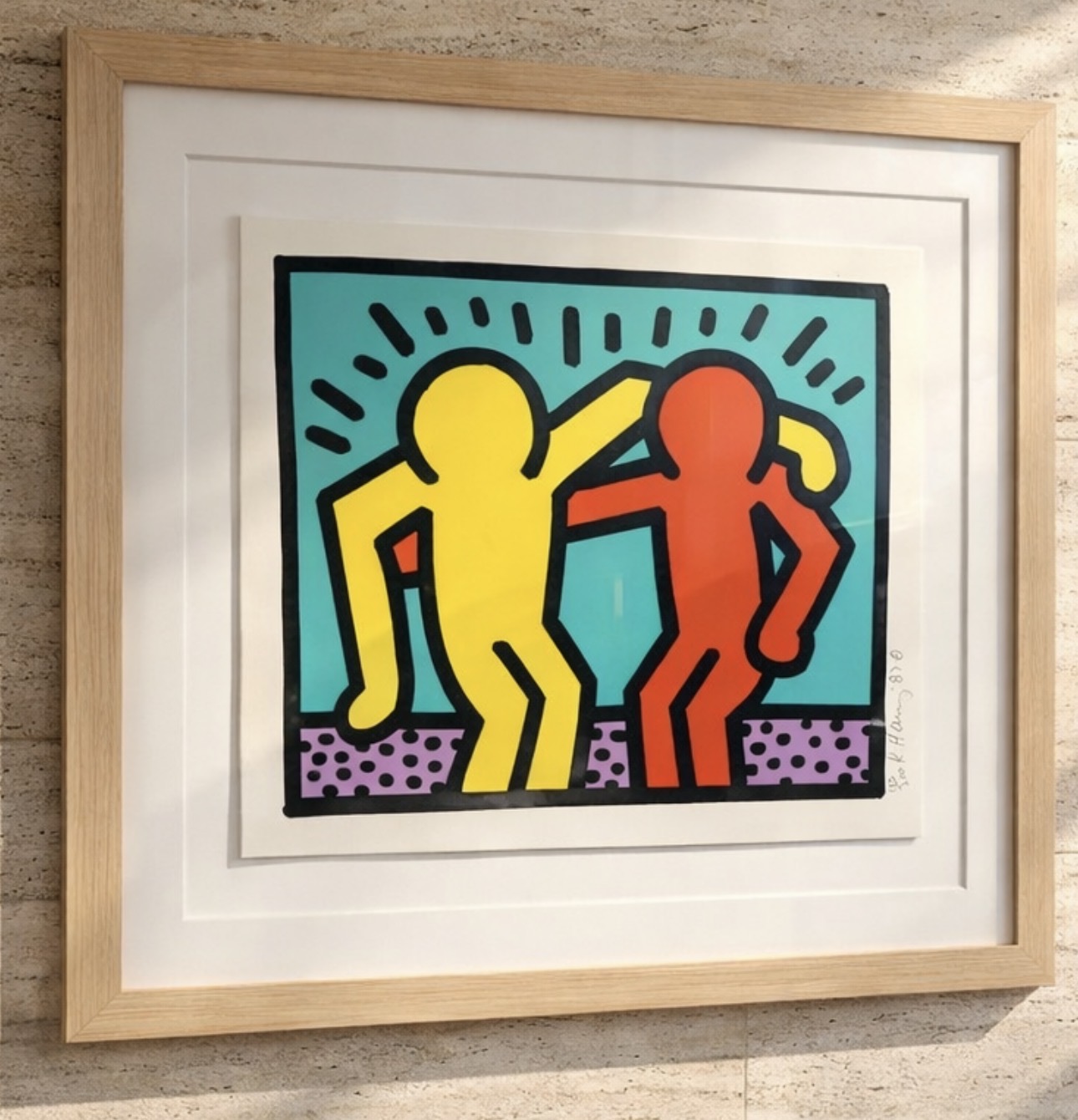
Signed and numbered from an edition of 200
12 × 15 inches (30.5 × 38.1 cm.)
To create a similar listing log in or sign up.
Log in/sign upAll works are inspected prior to delivery, work will be sent out tracked and insured at buyers cost. If you'd like to make specific arrangements or discuss collection then please contact us directly.
Accepted: Wire transfer
ART PLEASE Assurance Policy: Every ART PLEASE seller has been approved by ART PLEASE after a thorough review. All of our sellers are required to accept the following ART PLEASE policy: A buyer may return an item purchased through ART PLEASE, if the item received is not as described in its listing, or is found to be unauthentic.
Keith Haring was one of the most influential artists to emerge from the New York downtown art scene of the 1980s. Known for his bold lines, vibrant colors, and instantly recognizable figures, Haring developed a visual language rooted in street culture, activism, and accessibility. His work often carried themes of friendship, love, unity, and social awareness, reflecting both the optimism and urgency of the era. Haring believed strongly that art should be available to everyone, a philosophy he embodied through public murals, subway drawings, and the opening of his Pop Shop in 1986, where people could buy affordable art and merchandise featuring his imagery.
Created in 1987, Best Buddies (from Pop Shop I) exemplifies Haring’s joyful and universal visual vocabulary. The composition features two simplified figures standing side-by-side with a barking dog, rendered in thick black outlines and filled with bright color fields. The scene conveys companionship, loyalty, and playful energy—hallmarks of Haring’s iconography. Produced as a screenprint in colors on Coventry rag paper, the work is signed and numbered from an edition of 200 and measures 12 × 15 inches (30.5 × 38.1 cm.). As part of the Pop Shop I portfolio, the print reflects Haring’s mission to democratize art while maintaining the graphic power and immediacy that made his work a defining visual language of the late 20th century.