
S&H Green Stamps, 1965
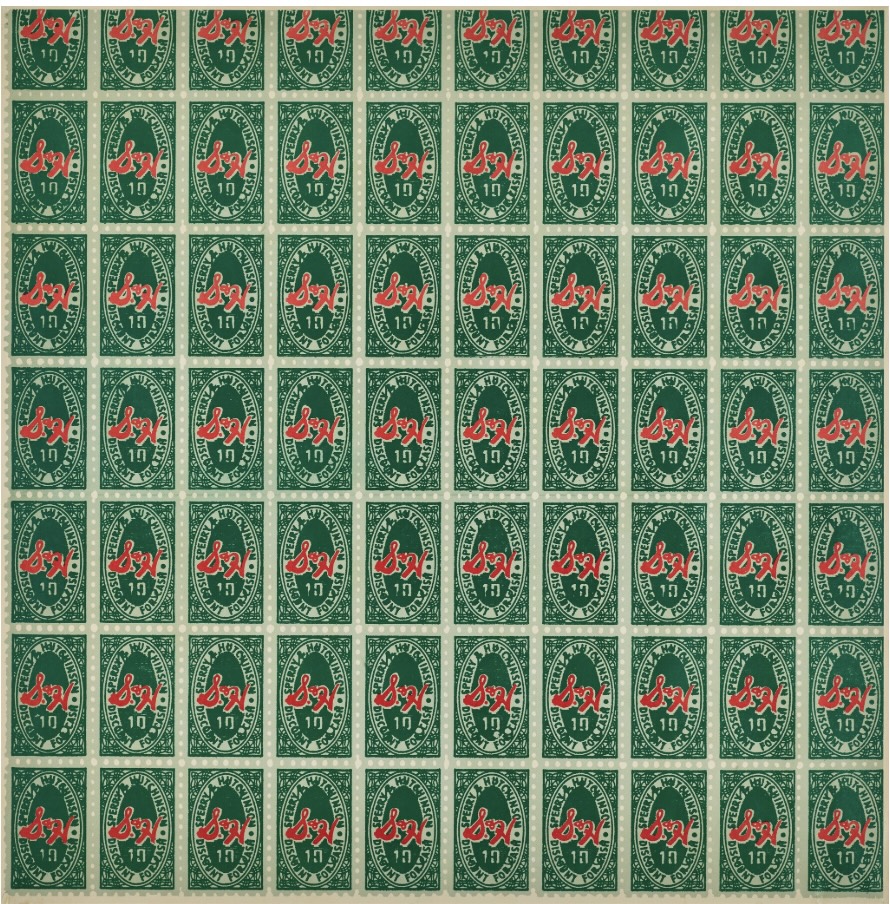
offset lithograph printed in colors on thin wove paper
23⅛ x 22⅞ inches (58.8 x 58 cm.)
All works are inspected prior to delivery, work will be sent out tracked and insured at buyers cost. If you'd like to make specific arrangements or discuss collection then please contact us directly.
Accepted: Wire transfer
ART PLEASE Assurance Policy: Every ART PLEASE seller has been approved by ART PLEASE after a thorough review. All of our sellers are required to accept the following ART PLEASE policy: A buyer may return an item purchased through ART PLEASE, if the item received is not as described in its listing, or is found to be unauthentic.
Andy Warhol’s S&H Green Stamps is a quintessential expression of his Pop sensibility, transforming an everyday consumer reward into a bold meditation on value, desire, and mass culture. Originally created in the mid-1960s, the work elevates the familiar trading stamps—once collected obsessively by American households—into the realm of fine art. By isolating and enlarging this mundane object, Warhol collapses the distinction between commercial ephemera and artistic icon, reinforcing his belief that consumer goods, branding, and repetition were the true visual language of modern life. The offset lithograph, printed in vivid colors on thin wove paper, carries the immediacy and flatness of advertising while simultaneously inviting reflection on how value is assigned—whether to groceries, stamps, or art itself.
This impression is particularly notable as a rare signed version, further enhancing its desirability within Warhol’s graphic oeuvre. Measuring 23⅛ x 22⅞ inches (58.8 x 58 cm), it bears the Andy Warhol Estate inkstamps on the verso and is annotated in black ink with the AWAAB reference number, confirming its inclusion in the official catalogue raisonné. Issued in an edition of approximately 300, the work exemplifies Warhol’s embrace of reproducibility while preserving a sense of authorship and provenance. S&H Green Stamps remains a sharp, witty, and enduring commentary on consumer psychology—one that feels as relevant today as it did at the height of postwar American consumption.