
Volkswagen (Lemon), 1985
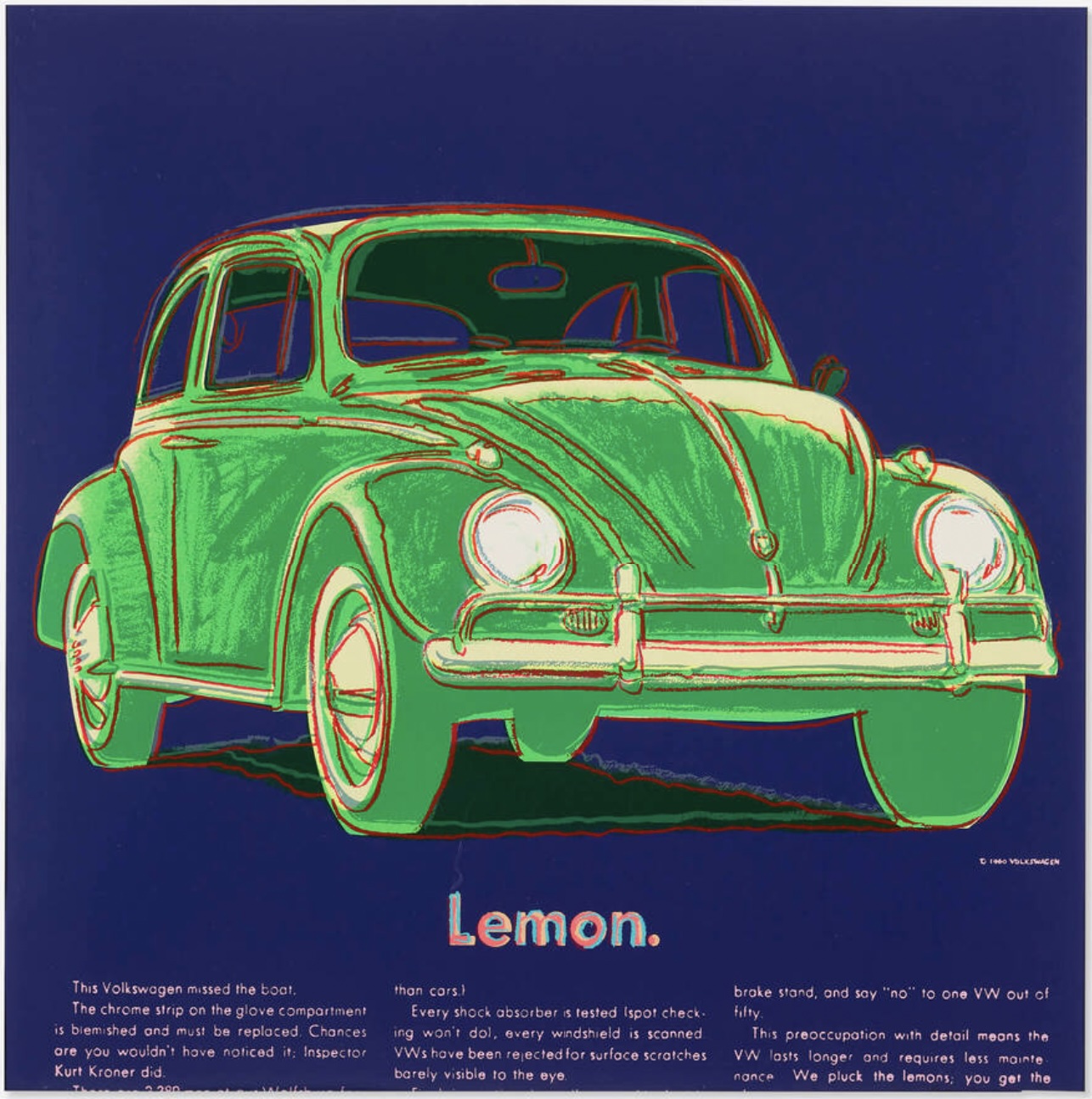
Signed and numbered from an edition of 190
36 x 36 inches (96.5 x 96.5 cm.)
All works are inspected prior to delivery, work will be sent out tracked and insured at buyers cost. If you'd like to make specific arrangements or discuss collection then please contact us directly.
Accepted: Wire transfer
ART PLEASE Assurance Policy: Every ART PLEASE seller has been approved by ART PLEASE after a thorough review. All of our sellers are required to accept the following ART PLEASE policy: A buyer may return an item purchased through ART PLEASE, if the item received is not as described in its listing, or is found to be unauthentic.
Andy Warhol (1928–1987) was the central figure of American Pop Art, transforming the visual language of advertising, celebrity, and mass production into high art. After starting out as a commercial illustrator, he turned familiar images—soup cans, movie stars, product logos—into icons of postwar culture, using the screenprint as his signature medium. By the 1980s, Warhol was revisiting the world of branding and media more directly than ever, creating portfolios that treated corporate logos and ad campaigns as the new mythology of modern life. His studio, the Factory, functioned almost like a production line, blurring the boundary between unique artwork and mass-produced object, and making his prints some of the most recognizable and influential images of the 20th century.
Volkswagen (Lemon) (from the Ads series), 1985, is a screenprint on Lenox Museum Board measuring 36 x 36 inches (96.5 x 96.5 cm), signed and numbered from an edition of 190. Drawing on the legendary 1960s Volkswagen “Lemon” ad, Warhol isolates the car and the bold, ironic word “Lemon,” amplifying its punch with high-contrast, fluorescent color and flat graphic shapes.
Part of his Ads portfolio, the work treats a piece of advertising history as both subject and ready-made composition, reflecting on how marketing images had come to occupy the same cultural space once reserved for religious or historical painting. By turning this clever, self-deprecating car ad into a glossy Pop icon, Warhol both celebrates and critiques consumer culture: the perfectionist rhetoric of the ad, the ubiquity of the brand, and the way a single word and image can reshape our desires.