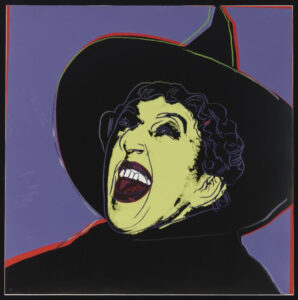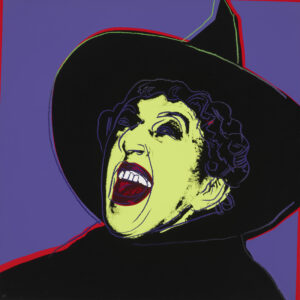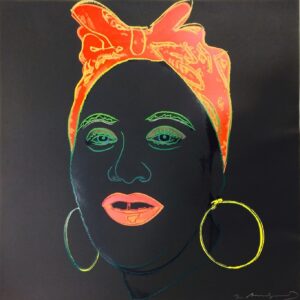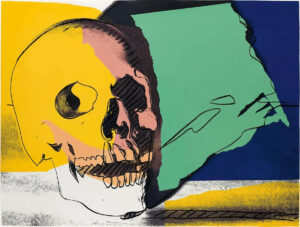

Committee 2000, 1982
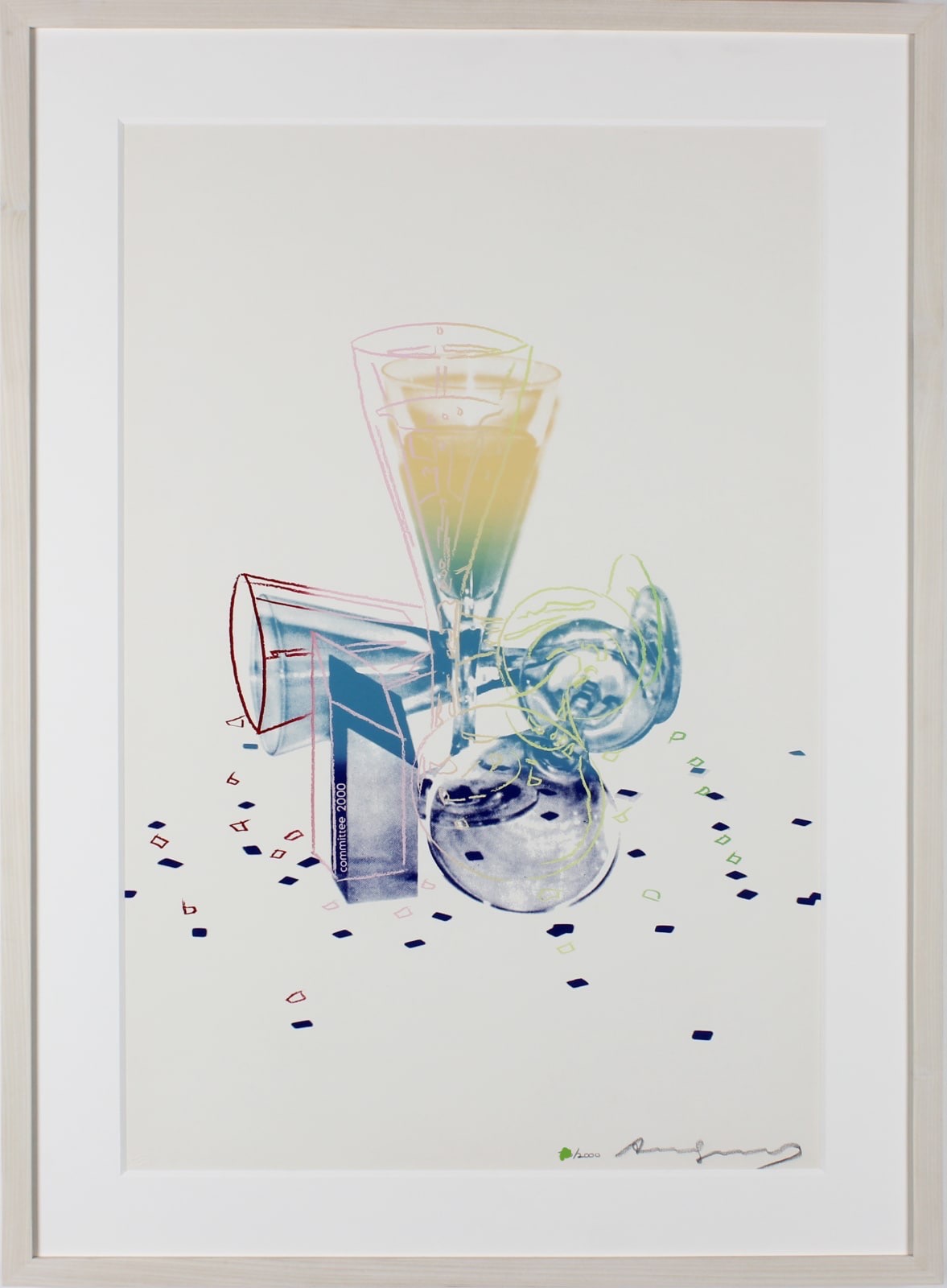
Signed in pencil, numbered from an edition of 2000
30 x 20 inches (76.4 x 51 cm.)
To create a similar listing log in or sign up.
Log in/sign upAll works are inspected prior to delivery, work will be sent out tracked and insured at buyers cost. If you'd like to make specific arrangements or discuss collection then please contact us directly.
Accepted: Wire transfer
ART PLEASE Assurance Policy: Every ART PLEASE seller has been approved by ART PLEASE after a thorough review. All of our sellers are required to accept the following ART PLEASE policy: A buyer may return an item purchased through ART PLEASE, if the item received is not as described in its listing, or is found to be unauthentic.
Andy Warhol’s Committee 2000 (1982) sits squarely within the late phase of his career, a period defined by reflection, legacy-building, and an intensified engagement with systems of power, repetition, and mass visibility. By the early 1980s, Warhol was no longer merely chronicling consumer culture; he was actively examining the structures—corporate, political, and institutional—that shape collective identity. Committee 2000 exemplifies this shift. Rendered as a screenprint in colors, the work carries Warhol’s unmistakable visual economy: crisp outlines, mechanical precision, and a surface that feels both impersonal and iconic. The title itself evokes bureaucracy and futurity, suggesting a governing body or abstract authority, while Warhol’s treatment reduces these concepts to visual signals, reinforcing his long-standing fascination with how meaning is manufactured and circulated.
The work was signed in pencil and numbered from an edition of 2000, underscoring Warhol’s deliberate tension between exclusivity and mass production—an idea central to his practice. Measuring 30 x 20 inches (76.4 x 51 cm), Committee 2000 is intimate enough to function as a collectible object, yet conceptually expansive in its ambition. The large edition size reflects Warhol’s democratic approach to art ownership, while the hand-signed element preserves a sense of authorship and authenticity. Today, the piece reads as both a time capsule of early-1980s cultural consciousness and a prescient meditation on institutional power and reproducibility—concerns that remain deeply relevant in an era defined by systems, networks, and image saturation.