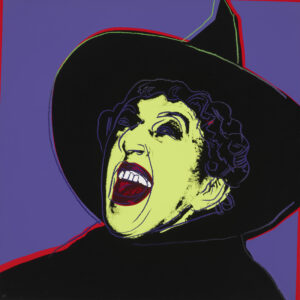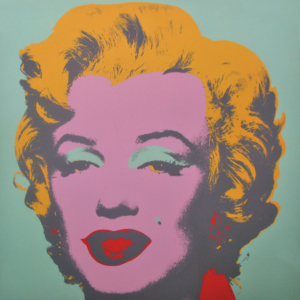

Blackglama (from the Ads portfolio), 1985
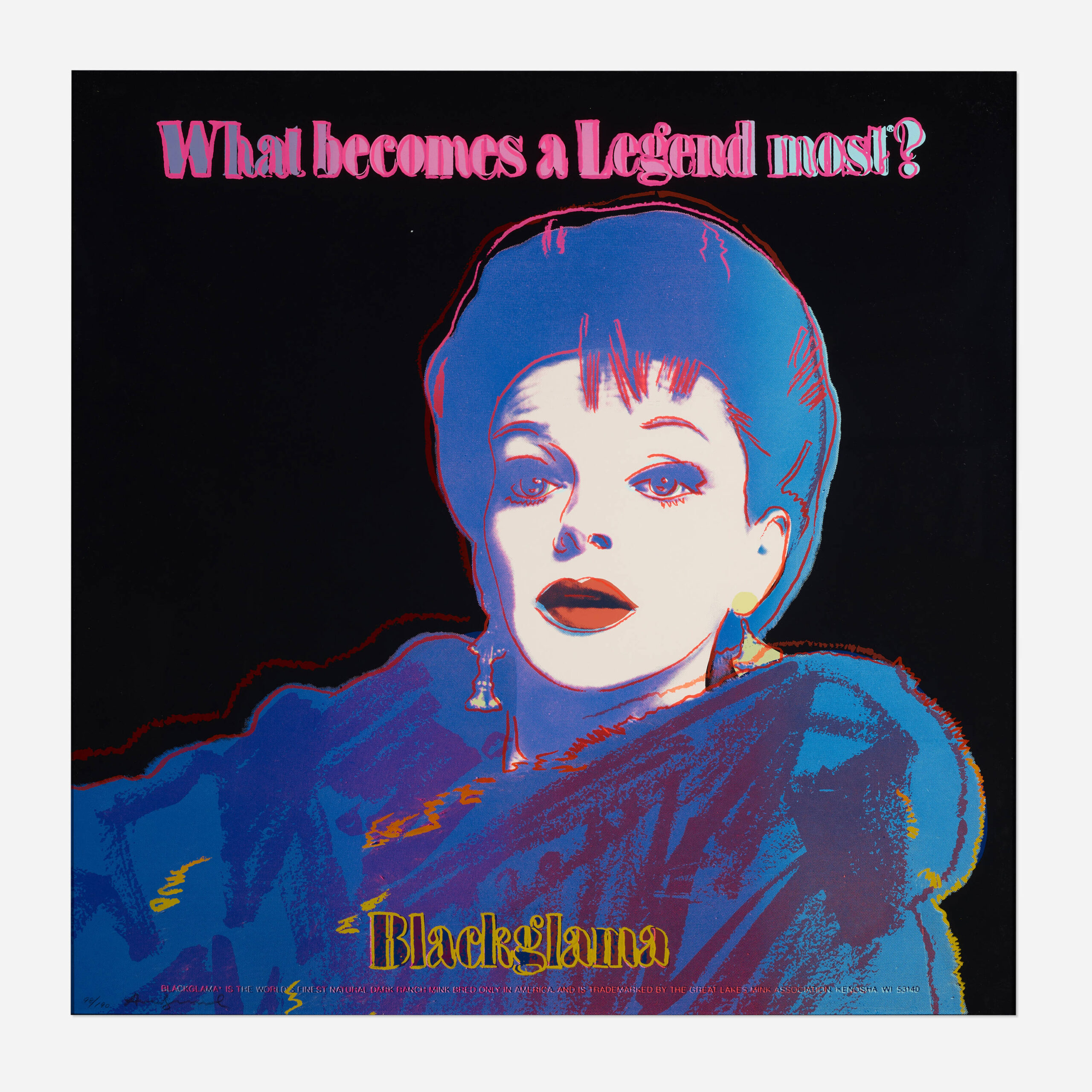
Signed and numbered to lower left from an edition of 190
38 × 38 inches (96.5 × 96.5 cm)
To create a similar listing log in or sign up.
Log in/sign upAll works are inspected prior to delivery, work will be sent out tracked and insured at buyers cost. If you'd like to make specific arrangements or discuss collection then please contact us directly.
Accepted: Wire transfer
ART PLEASE Assurance Policy: Every ART PLEASE seller has been approved by ART PLEASE after a thorough review. All of our sellers are required to accept the following ART PLEASE policy: A buyer may return an item purchased through ART PLEASE, if the item received is not as described in its listing, or is found to be unauthentic.
Andy Warhol’s Blackglama (from the Ads portfolio), 1985, is a striking example of his late-career engagement with commercial imagery and celebrity culture. Executed as a screenprint in colors on Lenox Museum Board and signed and numbered from an edition of 190, the work draws directly from the iconic Blackglama fur advertising campaign, “What Becomes a Legend Most.” Warhol transforms this high-gloss marketing material into fine art, flattening and stylizing the portrait while heightening its allure through bold contrasts and saturated tones. The square format (38 × 38 inches) reinforces the image’s graphic immediacy, giving it both a billboard-like presence and an intimate, collectible quality.
Part of Warhol’s broader Ads portfolio, the work reflects his ongoing fascination with fame, luxury, and the mechanisms of desire in consumer society. By appropriating an advertisement that already trades on exclusivity and status, Warhol blurs the line between endorsement and critique—celebrating the seductive power of branding while subtly exposing its constructed nature. The Blackglama series, in particular, resonates with Warhol’s lifelong interest in icons, positioning fashion imagery alongside his portraits of celebrities and cultural figures. The result is a work that feels both of its moment—rooted in 1980s glamour and excess—and enduring in its commentary on image-making, aspiration, and the commodification of identity.