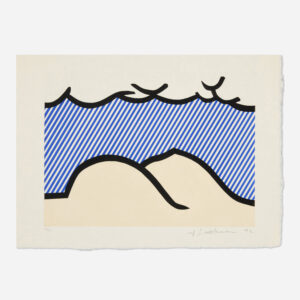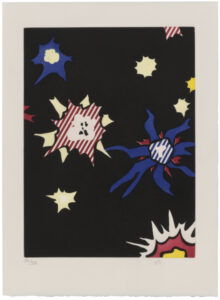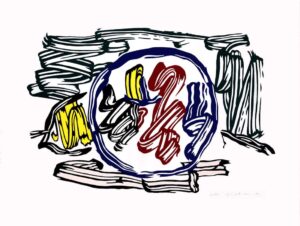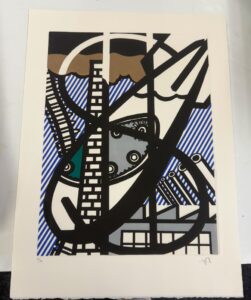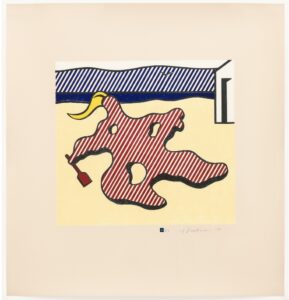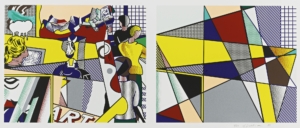

Illustration for "Hüm Bum!", from La Nouvelle Chute de l'Amérique, 1992
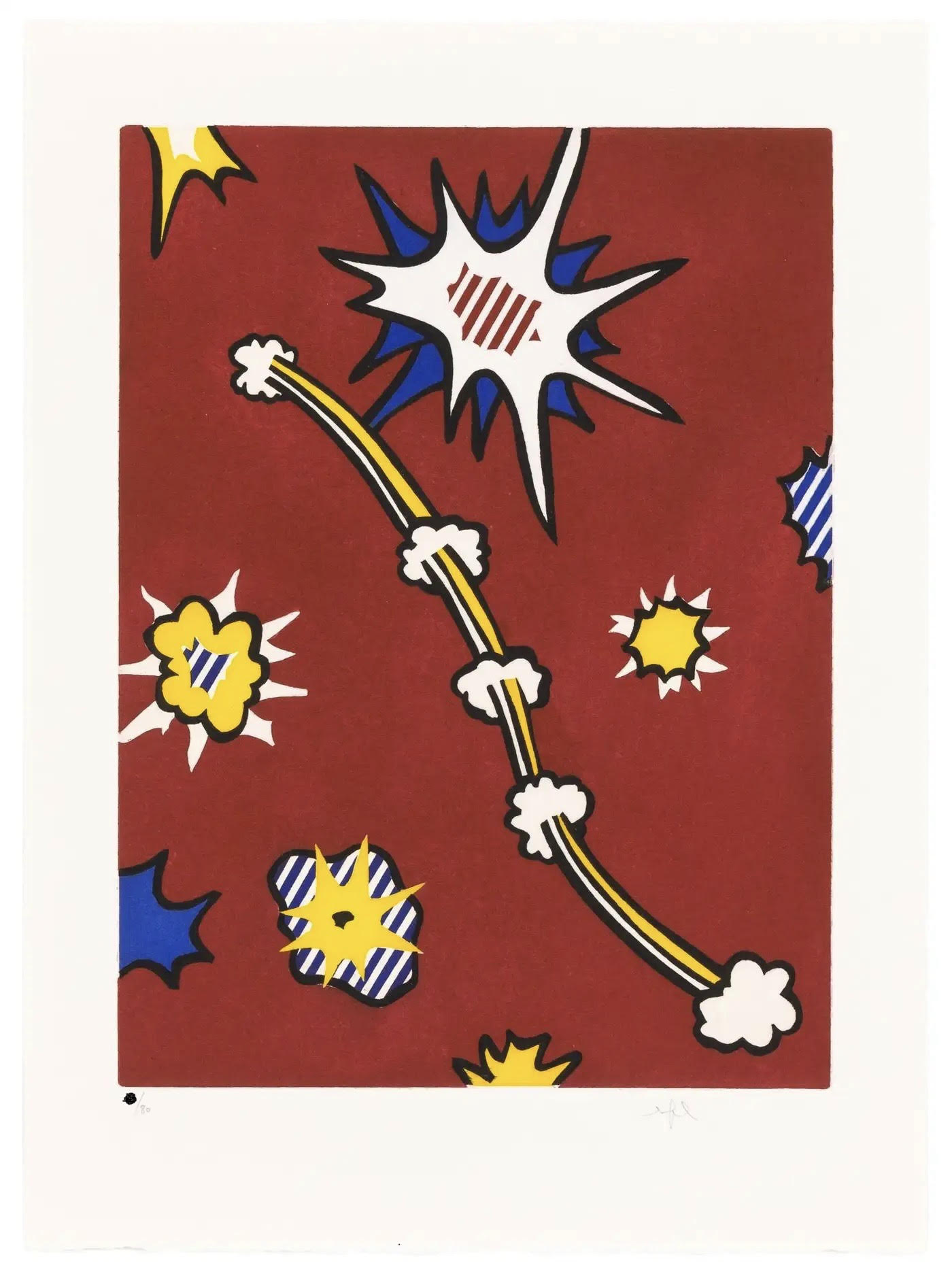
Initialed in pencil, numbered Image from an edition of 80
19 x 14 inches (48.3 × 35.6 cm.)
All works are inspected prior to delivery, work will be sent out tracked and insured at buyers cost. If you'd like to make specific arrangements or discuss collection then please contact us directly.
Accepted: Wire transfer
ART PLEASE Assurance Policy: Every ART PLEASE seller has been approved by ART PLEASE after a thorough review. All of our sellers are required to accept the following ART PLEASE policy: A buyer may return an item purchased through ART PLEASE, if the item received is not as described in its listing, or is found to be unauthentic.
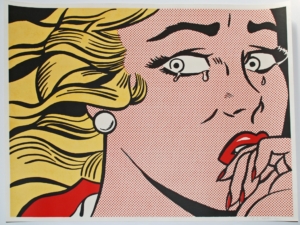
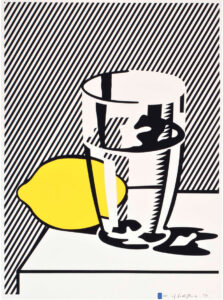
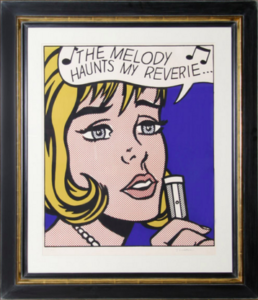
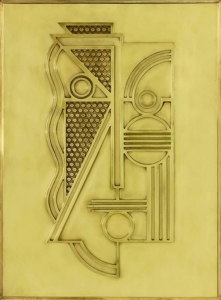
Roy Lichtenstein (1923–1997) stands as one of the defining figures of Pop Art, known for transforming the visual language of mass media into high art. Drawing inspiration from comic strips, advertising, and industrial printing techniques, he developed a signature style characterized by bold outlines, flat colors, and Ben-Day dots—mechanically inspired patterns that mimic commercial reproduction. Beneath this seemingly playful aesthetic lies a sophisticated engagement with themes of authorship, originality, and the blurred boundaries between “high” and “low” culture. Over the course of his career, Lichtenstein expanded beyond painting into sculpture and printmaking, where he rigorously explored how traditional fine art techniques could replicate—or subvert—the look of mass-produced imagery.
Illustration for "Hüm Bum!", from La Nouvelle Chute de l'Amérique (1992) exemplifies Lichtenstein’s late-career mastery of printmaking. Executed as an etching in colors with aquatint on Arches paper, the work demonstrates his precise control over line, tone, and texture, translating his iconic comic-inspired vocabulary into a more nuanced, tactile medium. The use of aquatint allows for subtle gradations that contrast with the crisp graphic contours, creating a tension between mechanical appearance and handcrafted process. Initialed in pencil and numbered from an edition of 80, the print reflects both exclusivity and technical refinement. At 19 × 14 inches (48.3 × 35.6 cm), it retains an intimate scale while encapsulating Lichtenstein’s enduring exploration of visual language, repetition, and the aesthetics of modern communication.